
The authentic self part 2: Just Be Fake
Identity as roles and goals


Allow me to stop weaseling around and admit it: I hate authenticity. I truly despise the concept. Authenticity is a corset that all of us, especially anyone with an interest in culture, must endure even though it crushes our lungs. I described the historical evolution of the “true self” concept in my last essay partially to show that it was a momentary creation of the past that can be left in the past, like Westerns. I welcome the turn away from authenticity because I honestly believe that anything else can be better than this fallacious, destructive concept.
But my argument from history can, at best, imply that the decline in authenticity is real and sustained. It cannot show that this decline is desirable. If anything, in the face of its decline you might think we should fight for authenticity even more vigorously. Even if structural forces align against it, even if it was a short-lived cultural meme born from a specific moment in Western history, wasn’t it still a good way to live? It is so enticing to be a baby boomer, buying a beachside house in Malibu for $50,000 and spending your 20s playing in a failing punk band until you “find yourself.” Everyone can feel some nostalgia for the Golden Age of Capitalism, the time of mass authenticity. If that era produced an excessive amount of self-serious mythologizing, then that’s just the price of some good life narcotics.
And the contemporary alternatives to the True Self experiment look bad enough to get the declinist muscles tingling. Just thinking about the actually-existing online self makes me want to bang out three more Substack essays about the fall of Western civilization. We’re talking about a global fakeness pandemic here, what could be worse than that? Then my predicted postmodern self is impossible to sell if it implies a return to premodern conditions of fixed social roles. Justifying this future would be an impossible task if not for the fact that the immediate past was truly terrible, much worse than the nostalgia suggests, and the fact that fakeness is a successful and in many ways ethically superior way to live life and organize society.
I want to mount a moral defense of fakeness against authenticity. I have the advantage that the new order remains fluid, so there is still time to intervene before new conditions harden in place. The authenticity era cannot be rescued or salvaged, but the ancient future can be. We can create an identity created by social roles (as was done in premodern times) that adapts itself in response to freely chosen personal goals. Instead of finding yourself you can construct yourself. If this is fake then it is still better than being authentic.
The authenticity ideal can be summed up with one word: retreat. I reject the True Self because it represents a threefold retreat: retreat from becoming, retreat from the outside world, and retreat from other people.
The journey of becoming, the goal of being
The first retreat of the authentic self is the retreat from Becoming. This is a very old concept and half of a very old debate, the divide between Being and Becoming. In ancient Greece Heraclitus asserted that nothing was fixed, and that everything was change: Becoming. His foil Parmenides asserted that change was illusory, that reality was fixed and timeless: Being. Ontologically the debate has never been settled, and likely never will be. With regards to human nature the boring middle position is likely true, that some parts of personality are intrinsic and some are dynamic, so that we are and we become. Really we project our own temperament onto everyone else, so the fixed personalities say that change is impossible and the changeable personalities say that nothing is fixed.
Since politics is an extension of personality into the public sphere, this divide can be loosely mapped onto left vs right. The conservative prefers Being, the radical prefers Becoming. So long as no side dominates the other and forces everyone to accept their view of human nature, everyone can happily argue Being v Becoming at dinner parties in perpetuity. But the hippies unintentionally smuggled a profoundly conservative philosophy of Being into a supposedly radical movement.
The ideology of authenticity minimizes Becoming as much as possible. It acknowledges that change is required, but it frontloads all the change into that initial “journey of self-discovery.” Once the journey is over, then you arrive at the destination of complete Being, the fabled state of Happiness. This state of authentic heaven on Earth can never change, or it is a false heaven. So any dissatisfaction after the dream of happiness is fulfilled indicates a serious problem with the destination. Because Becoming was supposed to be a temporary stage, any desire to change after reaching this goal throws doubt onto everything. Maybe you didn’t find yourself. Maybe you were never happy. It was all a lie. The spiral begins: in the worst case the full journey of self-discovery must be restarted. The perfect separation of Becoming and Being into different life stages makes both stages miserable.
These different life stages also obey two sets of contradictory rules. During the youthful journey everything is allowed. No roles are binding, no connections are fixed, and everything is temporary during the search. Once the journey is over and you’ve found that True Self, then total commitment begins to this perfect new life. The authentic subject has spent years training to live without connections or convictions, but they must adjust to this sudden new shift. If they cannot pull off the transition from relentless striving to placid contentment, then it is a sign that this latest self is not the right self.
This sudden shift amplifies the gap between adolescence and “full” adulthood to neurotic proportions. While all cultures have recognized the change from child to adult with coming-of-age rituals and stories, our authenticity-obsessed culture must dread the various life milestones–21 years old, 25 years old, 30 years old, whatever is the latest “it’s so over” age–more than any other. At 30, for instance, we are torn between the feeling that we didn’t fully commit to the Becoming Path of “finding yourself” in our 20s, but that we also aren’t fully ready for the Being Path of adulthood in our 30s. The adolescent shrinks into pure Becoming, the adult into pure Being. Under the authenticity myth you cannot feel both together. It becomes a failure to perform either role: not a free-spirited young person on the road to self-discovery, but also not a self-assured adult settled comfortably into their true self.
It’s strange to even strive towards pure, unchanging Being as a goal anyway. We regard other people as simple, unchanging types so we can make sense of them. Life is certainly simpler when you are just interacting with a series of fixed types: you can classify them, predict them, make Jerry Seinfeld-style observations about them. We usually reserve some complexity for ourselves, at least. Typically our own egoism makes us believe that we have the capacity for change and potential. Yet instead of extending some complexity to others, now authenticity asks us to simplify ourselves too! How sad to imagine reducing yourself to some unchanging type, just because it is the “real you.”
The fixedness of the authentic self evolved partially as a soothing refuge from the chaos and terror of modernity. Even as everything around you shifts, if you find yourself you might not need to change. The “real me”, the happy life, the dream job: these are the secular forms of heaven, the goals that motivate the individual subject. The economic motivation for this comforting story is obvious too: capitalists readily sell self-help books alongside fast food and soap operas.
Yet if the authentic self were just a comforting story then it wouldn’t be very insidious. Human history consists of a progression of ever more well-honed copes. But the authentic self myth does not only comfort the believer. It is actively maladaptive. It prevents you from effectively working for something even more fundamental than your identity: your desires.
Goodbye, cruel world
This is because the second retreat of the authentic self is the retreat from the real world. We are all wanting creatures, driven to do things to satisfy our desires. Sometimes those desires involve the inner emotions and feelings of our minds: we want to feel happy, or esteemed, or authentic. Sometimes those desires involve some sort of external goal: we want to get some job, or impress someone we care about, or skillfully perform a craft. Our internal feelings have an imperfect but definite connection with our external goals: we tend to feel good inside when we achieve something we want outside, and feel bad when our external desires are frustrated. If we treat the feelings themselves as goals, then we can achieve an internal goal–a feeling of joy or peace or connection–by pursuing these external goals.
But as ideologies like Stoicism, Hinduism, and Buddhism teach us, the mind can disconnect itself, to a certain extent, from the outside world. Some people get everything they could want in the outside world, but still feel bad. Some people stay cheerful despite cruel treatment by the external world. So in his Meditations, the Stoic emperor Marcus Aurelius wrote, “choose not to be harmed–and you won’t feel harmed. Don’t feel harmed–and you haven’t been.”
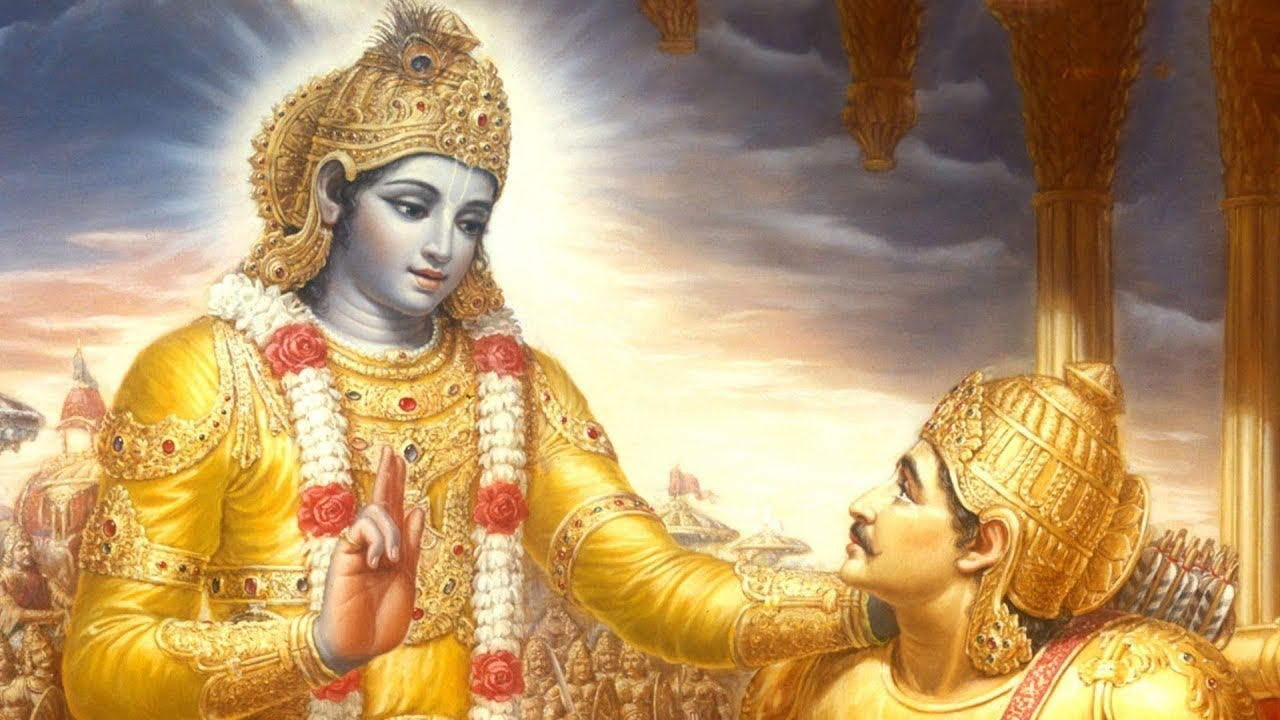
Those old ideologies like Stoicism and Buddhism tend to teach disconnection from both external and internal goals, aiming for a kind of constant equanimity–a “retreat into one’s soul”, as Marcus calls it. Stoics still pursue goals but try to maintain emotional detachment from the result. Similarly, in the Bhagavad-Gita Krishna advises us to “act without any thought of results, open to success or failure.” Buddhists go further still, and aim to literally want nothing.
The authentic self myth, which was heavily influenced by Eastern ideologies, differs in that it focuses entirely on internal goals. That goal is not equanimity but happiness. If life is a game, then Stoicism and Buddhism recommend complete detachment from the results. Western authenticity recommends that you withdraw from the game and then declare yourself the winner.
The mind creates its own Self to be a target. This cannot succeed because the human mind is slippery, devious, and complex. It can twist facts to fit its narrative. It can rationalize virtually anything. To try to chase an internal goal like “achieving happiness” is like trying to play a game where you may change the rules at any time, and where actions have no consequences. Our minds are kids who cry when we are losing a board game and then smash up the board.
When you focus on internal goals, behavior becomes untethered from the real world. You can control everything, so there are no stakes. Winning these mind games becomes more about pursuing the most comfortable option, since the mind dislikes change. And why change if there is no external judge to force a reckoning? When you pursue the self, you become trapped by your own nature. A naturally unhappy person may achieve the external goals they desire, but if the ultimate goal is internal “happiness,” the mind will reject this and remain unhappy.
External goals, in contrast, exist outside the self, in an external world that one cannot control. There are real stakes to one’s behaviors and actions, ones that force adaptation. It is a real game with real consequences, and this is the only real motivation that exists for internal change. We are naturally conservative, and we will only change what we are doing if forced to do so by something outside ourselves. As children we may be herded around by parents or teachers or coaches, but as adults we can set goals and let ourselves be molded by the very things we pursue.
But a world of people competing for external goals is a pitiless place. Dissatisfied losers may lash out if not controlled. In the past, society usually disciplined “losers” with a degree of brutality. Sometimes physical repression was used, but more often culture would promulgate ideologies that explicitly reinforce reasons why someone lost: perhaps they have committed sin, or perhaps they committed sin in a previous life. But social messaging reinforced the hierarchy of the external world and justified its results instead of disguising them.
The authenticity myth neutered societal discontent without the need for karma or the will of an all-powerful God. With the rise of the authenticity myth, people may compete for internal goals without unsettling the social order by trying to exercise their agency too strenuously. Powerless nonconformity proved a more powerful social sedative than enforced conformity ever was. Suddenly people may control themselves without the need for repression. They have retreated from the game, and are now playing with themselves. Winning is easy.
Given that most of us competing within vast societies of millions will end up as “losers”--given that the powerful never dismantled their machinery of repression, instead keeping it more hidden than before–given the many trials involved in this external world, is it so wrong to play a game you can always win? The authenticity ideal and its universe of books, films, and retreats do clearly diagnose the spiritual sickness of many who compete for external goals. If we retreat from the flock, then at least we aren’t sheep: crowd-followers, lost in samsara, tempted by the base desires for money, power, and status. The key characteristic of the sheep is that it follows the crowd: it does not act alone, but for others. The authentic individual must always be distinct from the crowd, and for good reason.
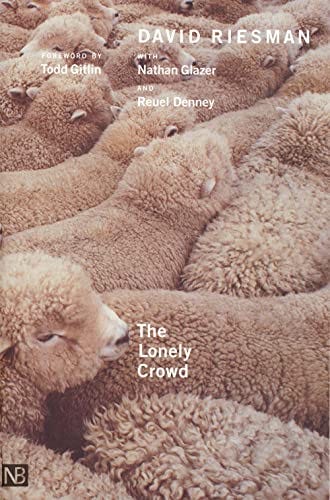
In 1950 David Riesman’s landmark sociology book The Lonely Crowd popularized the concept of the “other-directed” conformist, who desires love and harmony with people around them, contrasted with the “inner-directed” person who confidently consults their own “psychological gyroscope.” The other-directed person wants to be loved by others and will accommodate them to please people; the inner-directed person confidently follows what they believe to be right. The book “quickly became the nation’s most influential and widely read mid-century work of social and cultural criticism,” landing Reisman on the cover of Time magazine in 1954. Most took the book as a straightforward critique of conformity. In its time, cocktail party discussions of whether you were inner-directed or other-directed were as ubiquitous as talk of attachment styles is today.
But Riesman never intended his book to be a jeremiad. He disliked the self-classifications into types, did not blame any changes in American character on mass media, and noted the inflexibility of inner-directed people as a possible flaw. He never even used the term “lonely crowd”--his publisher invented that. Still, as happens so often with popular science, the book escaped academic purgatory and shot to success because it was saying something readers felt and the author did not intend. In this case readers resoundingly identified other-direction with phoniness and inner-direction with authenticity.
They were right to do so. The connection between the True Self and antisocial behavior is quite clear. What else are “external goals” but “goals related to other people?” To retreat from goals rooted in the outside world one must necessarily retreat from the active agents in that world. The authentic self is fundamentally an individual.
Hell is other sheep
The third retreat of the authentic self is the retreat from others. You learn to view human society with suspicion, and seek to create a secure castle far away from the haters, the losers, and snakes–that is, everyone else around you. Here authenticity dovetails with another influential movement that would considerably boost its profile for economic reasons. If authenticity appears as a creation of the left, individualism was its right-wing twin. As authenticity gained traction among the counterculture of the 1950s, Ayn Rand’s frankly psychotic form of individualism would influence the coming conservative reaction to that counterculture. The Randian individualists claimed to despise New Age hippies. But right-wing individualism and left-wing authenticity ended up being very willing dance partners.
The authentic individuals of the 60s left would prove enthusiastic adherents of the neoliberalism of the 80s right. Businesses, now experienced at marketing products to authentic consumers, framed the government as an oppressive force that prevented people from realizing their true selves–as entrepreneurs in a market. It is a short step from “it’s society, man” to Thatcher’s “there is no such thing as society.” The grown-up Baby Boomers of the 80s allied with Reagan and Thatcher against the stodgy Old Left, the out-of-touch geezers who wanted them to conform to organizations like labor unions.
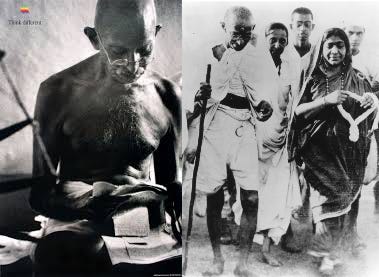
After all, the authentic person cannot join mass movements. They understand themselves as a loner: the misunderstood artistic genius, the roaming cowboy without a home. The emblematic figures of Apple’s Think Different campaign all led organizations of people, but the advertisements separated them from others. Gandhi, Edison, Hitchcock, and MLK were all photographed alone, without their accompanying followers, assistants, or film crews. The authentic individual cannot truly be themselves when bound by societal norms: they must retreat from others to find themselves.
This retreat that the individual seeks is impossible, because contra Thatcher there is no such thing as individuals. There is only society. The choice is not between the individual and society, but between two manifestations of society: the embodied society of physical people interacting in the real world, or the disembodied society of an alienated modern subject, fed and clothed by faceless organizations that delivers food, issues paychecks, and streams entertainment to empty houses. Animals in remote wildernesses cannot live totally free of human society, and neither could Ted Kaczynski in his cabin. And neither can any proud individualist.
The radical freedom of individualism is the true myth, an outgrowth of disembodied society stripping away the physical evidence of other human beings from modern life. It does fit well with the hypothetical future of disembodied brains in vats with no physical needs or desires. If the transhumanists ever do succeed in uploading our minds to the cloud, then we might have that total “freedom” to pursue an incorporeal, unattached identity. But, try as we might (and the tech bros are trying hard to change this), the external world still exists, and we do still depend on it. And in a capitalist society, the “real world” ends up incarnated in money, and so money ends up becoming the only good, the one that stands for everything else–for food, shelter, sex, sunshine, colorful flowers, and sandy beaches.
The internal goals of the True Self wilt against the attack of Moloch. Compared to collective movements the individual can hardly defend itself against materialism. The single authentic self severs our bonds and promises us freedom, but instead it makes it easy for Capital to pick us off one by one. Capital and authenticity form a feedback loop of isolation, since the sensible thing to do when facing these vast, inhuman structures is retreat. But withdrawing into internal goals makes it harder to safeguard external goals free from capital, allowing the market process to continue encroaching on our lives. Then the more everything outside the self is turned into market goods to be bought and sold, the more we retreat inward, like a turtle withdrawing into its shell.
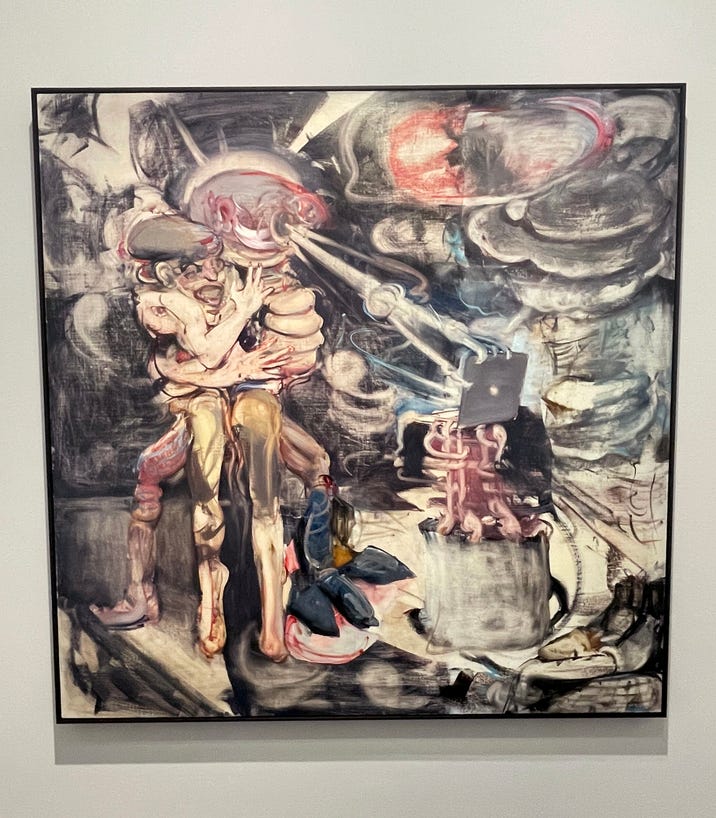
This is how capital isolates us, and how it coddles us. It makes us helpless without it, incapable of surviving without work but very capable of surviving without others. It spoils you with everything you think you want, but gives you no agency to steer the direction of your life. Capital is the helicopter parent of every anxious child of civilization. It is, as Christopher Lasch memorably said in The Culture of Narcissism, “paternalism without Father.”
Dictatorship of the childtariat
What is the authentic self but a child? Childhood is the stage of life where we most closely approximate the ideal of the authentic self. Self-discovery aims to uncover an authentic core by stripping away the obligations and chores of childhood in order to reach a state of sublime childishness, the “inner child.”
The Inner Child concept is a perfect distillation of the authenticity ideal. If disembodied capital forms the parent in contemporary life, then the ideal authentic subject must drive back towards childhood.
As the desire for authenticity grows, so does nostalgia, often in the form of consuming children’s media like cartoons and YA fiction. So too does the cultural preoccupation with youth seen since the late 60s, the onset of mass self-discovery. Kids are an obvious counterpoint to the phoniness of adults. The child acts freely according to whims and desires. The child considers only their own feelings and emotions. The child is thus clearly more spontaneous, self-directed, and “authentic” than any adult.
The authentic adult-child differs from the child only by maintaining the single economic role of worker and consumer, and only then for those who must work to live. The ultimate goal is a complete retreat from all roles. The primary appeal of wealth becomes freedom from all society, the proverbial “fuck-you money” that lets the rich say fuck you to any responsibilities. The fewer responsibilities one has towards others, the “freer” one is to be one’s true self. Other people inherently distort this, so only the singular, isolated person is free of these influences.
But the child can only exist without responsibilities by living at the mercy of adults who direct their lives. The inner child must also be a powerless one, an individual without agency. Authenticity embodies itself as play, as enjoyable but largely meaningless action. So much loudly proclaimed “action”, especially in politics, feels meaningless because the average adult is passing the time until Mom and Dad can step in to take the real action. Everyone from aimless teenagers up to prominent government officials dream that some adult will take the reins and figure things out for them, so they can return to their preferred version of adult play. In theory the superstructure of power finds this very beneficial, as it neuters any forceful action for change and reduces power struggles to performative games. Yet this assumes that the powerful leaders in charge of that superstructure will not themselves act like children. When presidents, CEOs, and intellectuals stop behaving like adults, who will tell the kids that playtime is over?
The self and the no-self
The ideal of authenticity, then, represents a profound retreat from the multiplicity, chaos, and unpredictability of the outside world. The post-60s generations who searched for authenticity learned to detach from other people. Withdrawing into an endless, nostalgic childhood, they bought the best self-defense mechanisms capitalism could supply. They chose to preserve a fixed, fragile identity by protecting it from contact with the Other: other goals, other situations, other people. The only way to be authentic was to lock up some sort of imagined identity in a safe box of narcissistic fantasy that other people could not touch–or, failing that, to abandon others entirely. Narcissism is the inevitable result of authenticity because it too is a form of retreat from others. Narcissus was not only obsessed with his own reflection: he rejected the advances of all real people who approached him. The authenticity experiment created a culture of narcissism without liberating us from phoniness. It resulted in all the old bourgeois frivolities with none of the bourgeois respectability. By the end we implanted the soul of a judgmental Victorian into the coarse trappings of contemporary consumer culture. We were all the victims–everyone who grew up in that era and lived through it. My younger self, my family, and my friends were victims.
In short, it was fucking terrible and I hated it.
Is there no alternative? I previously said that the Internet, in a classic case of cold media returning social dynamics to earlier types found in premodern cold societies, will revert identity to an ancient form that predates authenticity. But premodern identities seem so harsh and rigid that no one can really defend them. Maybe such a return can be imposed, but it will not be welcomed. In any case we do not live under the same material conditions as premodern societies and are not bound by their limitations. We do not live in conditions of widespread hunger, pestilence, and squalor, and so no one can honestly argue that we require rigid social roles to fend off barbarian invasions or famine. We can think of a more appealing alternative to authenticity that does not embrace medieval living standards.
As far as I can see, there are two honest and historically significant answers to the question of identity. The first is the approach of Buddhism. As I mentioned before, it counsels complete detachment from all goals, internal or external. Along with this removal from earthly desire it pushes you to go all the way to complete dissolution of the self. This is the concept of anatta, or “no-self.” I am not an expert on Buddhism and there seems to be considerable debate between sects about the exact meaning of anatta, but most Buddhists identify the “self” as an illusion caused by continual processes, a kind of ever-changing phenomenon stuck in a state of pure Becoming. This seems hard to square with reincarnation. The analogy often used is that of a flame being passed between two candles: each flame is distinct, but one flame was “caused” by the one that lit it. Nirvana literally means “blowing out,” where the candle of life is extinguished and the state of anatta is reached.
If you choose to follow this doctrine and aim for a state of “no-self”, then I totally respect that. Buddhism offers a perfectly coherent and respectable answer to the question of who you are. But as an ascetic ideology it still counsels a retreat from earthly matters. It is even more pitiless than authenticity, not even offering the consolation of self-involvement to soften the blow of isolation. It also never claims to be a mass ideology, since very few can ever dissolve the self completely. But the negation of no-self is one of two possible responses to the illusion of self, the other being affirmation.
For the ontological insight of Buddhism–that nothing is permanent and that there is no essence–can lead just as readily to affirmation as to negation. Affirmation also entails surrender to the complexity of the world and its constant Becoming. By surrendering to the outside world we surrender our control over our own identities and recognize that the illusory self is created from the outside. Compared to the “no-self” of anatta, the alternative is the “many-self.”
If Buddhism teaches that the self may be dissolved by withdrawing from the world, then it must follow that the world–the Other, distinct from us–creates the self. Before personality and conscious thought come the disordered sense-perceptions of the infant. From these exterior sensory experiences the interior human identity emerges. It is just as contradictory and fragmented as the world. It is just as multifarious. An identity created from the outside world must be fluid and impermanent, like a flame. But let us be more specific when we say “the world.” As we saw earlier, the outside world is another way to say society. That is: the Other is nothing more than other people.
Multiple authenticities and the many-self
This alternative to authenticity is an identity created by social relations with other people. The self is a construction of relationships, a network where our identities are defined in relation to other identities. It is similar to the way words are defined with other words. Look up your identity in a human dictionary, and your definition will point to other people: their definition within that same dictionary will point back to you. The entire structure of human identity supports itself in a system of mutual dependence.
These relationships overlap to form a collection of selves that coexist within one person. Psychologist Brian Little uses the term “multiple authenticities” to describe how someone may act with sincerity in different situations depending on the people they encounter. The key to sincerity across these situations lies in their relation to our deeply-held goals, which remain consistent. The focus shifts from internal goals back out to external goals, from the pursuit of happiness to the “happiness of pursuit,” as Little puts it. You then adapt yourself, in a process of Becoming, to accomplish these goals.
These goals may be freely chosen, which differs from the premodern system of fixed goals. People need not be forced to till the land or fight in battle or bear large litters of children. But any of these projects, once chosen, construct the identity. Since no essence ties the self to any of these projects, they may be abandoned in favor of a new one, at which point the self will change once again. Causality flows from the project to the identity, not the other way around. You will be whoever you must be in order to do what you must do.
The anxiety of choice so characteristic of plentiful life in industrialized civilization does not disappear. But it moves from selecting which consumer identity best fits an internal essence to selecting the goal that the future self will be comfortable serving. Politically this also requires significantly more agency to be devolved to small-scale enterprises and small groups. Maternalistic capital must grant power to its children, even if it leads to their suffering. A durable identity is an authentic core plus agency. It is thought plus action: without action, it shrivels into a phony copy of an image of itself. It produces the false anxiety of narcissism. True freedom comes when one can choose what to do, not who to be.
This freedom extends to our conceptions of our own characteristics. While we do contain a fairly stable base personality that some identity with the “self”, Little describes “free traits” that we may adopt to further our personal projects. Of course, even the degree to which we adopt free traits varies between people. This aspect of personality is called self-monitoring. High self-monitors adapt themselves more to situations, while low self-monitors tend to remain more constant between situations. It sounds very similar to Riesman’s inner-directed vs outer-directed people. I regard this as simply another term for those who prefer Becoming versus those who prefer Being.
The low self-monitors have had an amazing multi-decade run. They convinced everyone that any sort of self-monitoring was morally wrong, and that remaining constant in every situation was a virtue called authenticity. But all of us change between multiple authenticities every day. As an example, take the linguistic phenomenon of code-switching, where we change our language depending on who we are talking to. This could be as simple as breaking out your esoteric Internet slang around your friends, but not your grandma. In the past code-switching was far more elaborate, ranging from the formal/informal second-person pronoun found in many European languages to the multi-tier hierarchy of pronouns and verbs found in East Asian languages like Japanese and Korean. Of course the authenticity movement vigorously opposes code-switching in all its forms. We have been told that it is proper to use one single “true” language all the time. But I like the thoughtfulness of code-switching and its consideration about the recipient of one’s words. It is boorish to speak the exact same way with everyone. It forgets that language is shared: while you remain constant on one side of every conversation, the other side changes, and the language must change to reflect this.
Self-monitoring, code-switching, multiple authenticities: all this can be credibly described as fake. But the accusation of fakeness is really a confession from the accuser. It should surprise no one that broad concerns with the “natural” or “organic” grow in direct response to an ever-more artificial society with ever less contact with “nature.” The fakest person you know won’t shut up about how real they are.
Goal-oriented multiple authenticities, created from networks of social interaction, are in fact considerably more natural than a single authentic self. That concept was always an ideal, a creation of books or lab experiments. These multifarious forms of identity I described all involve contact with the outside world. The isolated mind can create an idealized unitary self, but that unitary self must remain on constant defense against exterior threats. The fluid self recognizes the reality of other selves, and absorbs their essence confidently. It affects material reality through action.
Goal-orientation also produces more distinctive, diverse identities. I am convinced that most people remained fairly goal-oriented throughout the entire authenticity era. What truly bothered people was not some dizzying array of identities but a corresponding diminishment in values down to the single belief system of materialism. While you could “be” whoever you wanted to be, everyone turned to the same goal of earning money. Since goals shape identity so fundamentally, every person in the West became the same type of acquisitive, ambitious personality. The punk, the yuppie, the guru, the activist, and the soccer mom were all masks worn by people striving for the same end. It was the denial that this shared goal produced identical personalities that allowed materialism to entrench itself so deeply. By recognizing the primacy of goals in shaping identity, we can allow different goals to emerge. Only then will personalities that are both distinct and vigorous form.
I believe we have the window–a brief one–to create an alternative to authenticity. If we do this we can avoid the destructive old debates: selling out vs staying true, self-actualization vs settling, freaks vs squares. And by disengaging from endless debates on the self and directing our attention towards the exterior, we can behave more naturally–which is what those in search of authenticity were after all along. Attention must be turned from the inside towards the outside.
As painful as the external world can be, it cannot compare to the suffering inflicted by the mind in an internal war against oneself. Many people brush off the agony endured in “finding oneself.” It is dismissed as the First-World problems of an effete class, nothing more than ennui. But the suffering caused by authenticity could be deep, difficult to shake and impossible to even discuss. Therapy may not quiet it; medication may not quiet it. In some cases it led to human casualties.
Meaning in the Magic Bus
Chris McCandless, the subject of Into The Wild, believed in finding himself. He was a sensitive man with a keen moral sense who had the misfortune of being born into a culture of nihilism. He looked down on “conformity and conservatism,” and donned a new identity: Alexander Supertramp, an “aesthetic voyager,” a creature of the endless horizon. He left behind other people: first his family, then the other drifters he met on the road, and finally society itself. The Supertramp headed to America’s last frontier, Alaska. At every turn people offered him help, supplies, support: at every turn he refused it. There he would die, alone and starving, in an abandoned vehicle called the Magic Bus. He became a martyr for the authenticity myth, the Magic Bus a pilgrimage site for the nomadic and the lost.
Many others believe that McCandless had a death wish. I agree in the sense that the drive for authenticity is fundamentally identical to the death-drive. Only in death could he become a creature of pure Being, unchanging and true. Likely he felt so hunted and exhausted by his internal struggles that he wanted some final resolution out in the wilderness. He said he sought a “climactic battle to kill the false being within and victoriously conclude the spiritual pilgrimage.” He would discover himself or die trying.
Alone in the bus, he read Tolstoy. It affected him deeply. McCandless underlined a passage from the short story “Family Happiness”:
“I have lived through much, and now I think I have found what is needed for happiness. A quiet secluded life in the country, with the possibility of being useful to people.”
After this, McCandless decided to pick up camp and leave. Perhaps he wanted to leave Alaska entirely, maybe even to find his own family happiness again. But he could not make it out. He had no map, and he found himself trapped by a raging river. He returned to the Magic Bus.

His situation worsened. He returned to Tolstoy, even as he starved to death. He read The Death of Ivan Ilyich and, like the title character, had a near-death epiphany. Confronted with annihilation, he wanted to turn from the path of authentic solitary confinement, back towards others and towards life.
He was too late to save himself. Only his newfound wisdom survived. His decomposing body was found in that bus next to words he had scribbled in the margins of a book: “HAPPINESS ONLY REAL WHEN SHARED.”
Happiness, yes: sadness too, and anger, contentment, love. All are only real when shared. As Antoine de Saint-Exupery said: “Happiness! It is useless to seek it elsewhere than in the warmth of human relations. Our sordid interests imprison us within their walls. Only a comrade can grasp us by the hand and haul us free.” The human condition itself is a shared one. Identity is not something within; it is incarnated through human relations.
I love when you hate