
Our Ancient Future: the world, hot and cool
Bringing back grand narratives to explain modernity and its children

Modern blues, postmodern noise
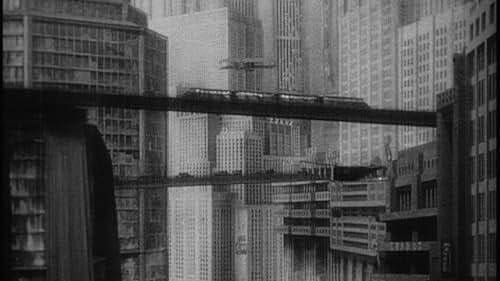
In order to bury the 20th century, the word “modern” must be thrown into the ground with it. The common belief is that we still live in the “modern” era--the machine age, the advanced civilization of technology and change. Certainly this world of computers and bullet trains and spaceships physically looks modern. They make shows called Modern Family and podcasts called Modern Love. On the Internet they tell you to “reject modernity; embrace tradition.” But “modernity,” which was coined sometime in the 1860s, is old enough to be the only tradition any of us know.
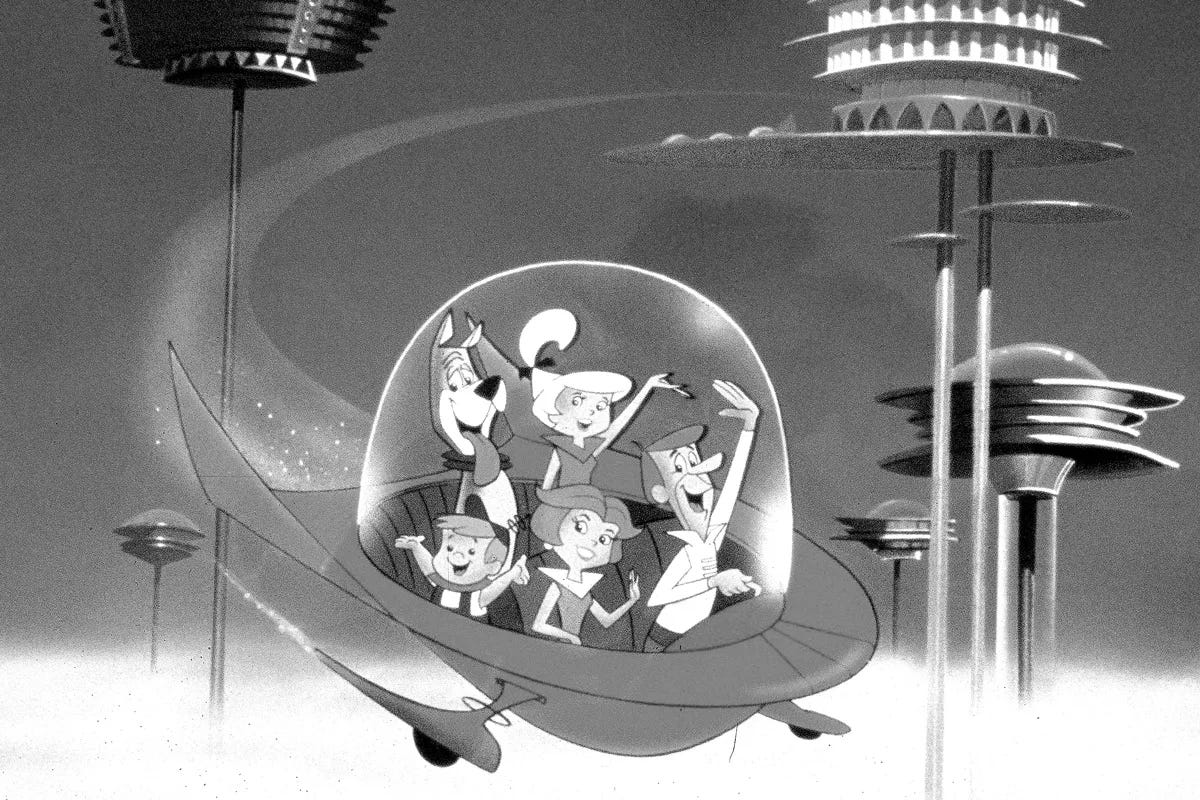
Charlie Chaplin made Modern Times back in 1936. The "modern art" in our museums is over a hundred years old. It's been 70 years since The Jetsons prophesied the future that we should expect (Peter Thiel is still upset we don’t have flying cars). And when we complain–as virtually every cultural commentator, artist, politician, dinner party guest, and local bar patron does–we compare the current state of things to that old “modern world”, or at least how we expect the modern world should have turned out. That strange feeling you get when you wake up, the overwhelming sense of cultural decline and terminal rot that makes you read Substack for essays on civilizational collapse, dates back neatly to a wave of changes that swept through the Western world in the past 50 years–changes that have never been adequately named and categorized. Some call the sea-change “neoliberalism”, others “late-stage capitalism”, others “deindustrialization”. All vague terms, and mostly narrowly focused on economics. The vaguest term of all was coined 50 years ago, by a group of (mostly French) intellectuals, who gravely announced that we had entered the "postmodern" era.
Those intellectuals were right to diagnose the end of modernity. But that term “postmodern” would never be used for catchy movie titles. It long ago transitioned from a topic of serious academic debate to a punching bag. Sometime around the 90s “postmodernism” became a lazy scapegoat for the right and left: anything you don’t like about contemporary culture can be pinned on postmodernism. Hollywood just can’t stop pumping out sequels. The media is biased and ideological. Different political parties can’t agree on what is real. Why? Pin it all on postmodernism, our favorite whipping boy. It explains nothing and covers up everything. The word “postmodern” indicates nothing about this world other than the fact that it comes, chronologically, after modernity. It tells us nothing about the features of this new world: it defines the present by negating the past. The term is so vague now that calling anything “postmodern” feels like some sort of meta-joke, like you know how tired this criticism has become. Things escalated to the point that some tried to describe musicians like Lady Gaga as “post-post-modern”, which marks as good a point as any to declare “postmodernism” completely moribund and ridiculous.

For all their faults, the postmodernists were just trying to understand the massive changes in art, economics, and culture that began after World War II. We have not exactly advanced much in our grand historical understanding since the 70s. There’s something about computers, the Cold War, social justice, maybe the Chinese Century. It’s all very confusing. Growing up, I recall every history textbook I ever read narrating a clear, objective (sounding) history up until about 1965 or 1970, at which point every text, without fail, would degenerate into a haze of vague euphemisms. If the postmodernists were right, and the great age of modernity ended around that time, then it would explain much of the division, confusion, and rot felt by most areas of culture. Yet despite producing more analysis, essays, and think pieces than any civilization in history, it’s easier for us to just pretend that all the old rules of modernity are still in play. The modern myths–of rationality, growth, linear progress–continue to animate our institutions, but no one quite believes in them anymore. As the postmodernists predicted, this has led to widespread dissatisfaction.
The vibes are not good. 2003 was the last time where a majority of Americans felt “satisfied” with the way things are going in the United States. So what exactly has gone wrong recently? You could definitely blame those (French) scholars who taught us not to “believe in truth.” On one side you can find liberals blaming postmodernism for the “incessant lying” of Trump’s “post-truth” ideology; on the other side you have conservatives claiming that postmodernism is a “direct descendent of fascism.” The word has an image problem. Even academics shy away from analyzing culture and society through a postmodern lens, typically adopting instead the Manichean view of a grand struggle against capitalism, white supremacy, and patriarchy. That these battles essentially reproduce identical struggles from 50 years ago without adding much new only proves the postmodernists annoyingly right. (The SCUM Manifesto of 1967, for my money, blows any contemporary anti-male screed out of the water. I challenge any Substacker to match it.) Postmodernism proved so unpopular that even its original home, academia, booted it out. Postmodernism is now lonely and friendless. That doesn’t mean it is wrong.
I want to reclaim the term postmodernism, now that it is scorned on all sides. Its cold reception might be charitably attributed to marketing errors (like its stupid name) rather than any lack of predictive power. Critic Steven Connor argued in 2020 that “rather than having gone extinct, Post-Modernism has become endemic.” Post-modernism was right to recognize that modernity ended decades ago: it simply failed to fully comprehend what would come after it. Now well into the postmodern era, I think there is enough data to refashion a new understanding of the many implications of the “end of modernity.” Postmodernism recognized the change, even if it could not describe it.
Postmodernism handicapped itself from the beginning by defining itself in negative terms. The first philosopher to bring the term “postmodernism” out of art and into the social sciences, Jean-Francois Lyotard, tried his best to explain the term in The Postmodern Condition (1979): "simplifying to the extreme, I define postmodern as incredulity towards metanarratives." Even he seems to know that this definition feels like a cop-out. There’s something disingenuous about saying you favor no grand narratives, speak from no specific culture, and believe in nothing. It sounds like that “worldly” guy at a party who tells you that he has ascended past the quaint limitations that fetter your outdated ways of thinking. And believing in no grand narratives does imply a belief in an even bigger, nihilistic grand narrative. It is logically incoherent as a stance, only making sense as a sort of intellectual fashion. Postmodernity projects no confidence: it merely hides behind modernity, even as it denounces it.
For all the postmodern disdain of grand narratives, it did offer one last story to replace all the old ones. The metanarrative of all metanarratives centers on modernity itself–on the long move from premodernity to modernity to postmodernity–and this story is the key to understanding the current era, and to unearthing whatever postmodernism still has to offer. So what was modernity, what came before it, and what does it mean to live “post” modernity?
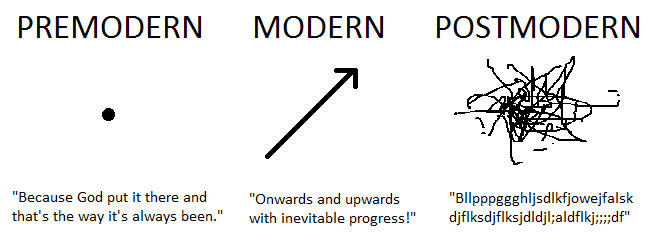
The narrative goes that people in premodern societies lived simple, stable lives. Their worldviews were fixed by certain grand narratives given to them by society. This gave their lives meaning, albeit a rigid, fixed meaning. Religion, tradition, monarchy: across the world, people lived a kind of predetermined, unconscious existence mapped out by society. For a feudal peasant, for instance, we look back and suppose that everything in their life was understood: they were Christians, they had to serve their local lord, and they had to fulfill family roles such as “son” or “daughter” until they grew up, took on the new roles of “father” or “mother,” and started the cycle again. Premodernity, whether in medieval Europe or pre-Columbian Mexico, was inhabited by unquestioning savages, living in a happy Dark Age. Then, the story goes, modernity came around and started messing things up.
Sometime in the 16th or 17th century, all kinds of new ideas started floating around, disrupting all previous orders: the Reformation, the Renaissance, the Scientific Revolution, the Age of Exploration. In the 19th century modernity gained industrial tools, and new metanarratives began an industrial level of production. New ideologies were pumped out like mass-produced cotton shirts in this century of -isms: liberalism, nationalism, socialism, conservatism, absolutism, nihilism, feminism. These competing grand narratives caused friction and divided communities. In the 20th century they tore the world apart. Millions of people died horrible deaths for ideas: nationalism, fascism, and communism. After the World Wars, people stopped believing in big ideas. Scholars deconstructed the knowledge systems of the past. Now, in a postmodern world, we supposedly have no grand ideas at all. At best, we recycle the symbols of old in timeless pastiches. The intellectuals deconstruct ideas instead of building new ones; artists make sequels and remixes; politics wallows in nostalgia. We are bereft, adrift without meaning. Simply put, in the premodern world there was one source of meaning. In modernity, there were several competing sources of meaning. In postmodernity, there are no sources of meaning.
That is the grand narrative. Yet this story still leaves out a constructive, meaningful definition for postmodernity. The definitions for our current world are defined by negatives: by what it is not. We do not have fixed ideologies, we do not believe in linear progress, we do not imagine a better future. As Mark Fisher said, the future has been canceled. Even when we imagine a different future (flying cars, space travel, aliens), we think our current, confused postmodern subjectivity will never change. But the future will be different–at least from the immediate past. Yet in the great turn of history it will come to resemble an all-but-forgotten world: the premodern world. The further we move from modernity, the further our minds, and the world they create, will come to resemble the ancient past.
In politics, media, economics, science, and culture, our institutions and ways of thinking will change to modes that existed before the disruptions of the modern world. If you want a grand narrative, try this: we will find ourselves in an Ancient Future.
“Ancient Future”: there is a point here
Not a bad dinner party take. Sounds provocative. But I can hear the jokes already. We aren’t riding around in chariots; we don’t wear face paint and dance to make the rain come; we don’t worship god-kings sitting atop golden thrones. Our world doesn’t look like the ancient past; it looks exactly like the modern world did. We drive around in cars, vote in elections, and wear the fast-fashion versions of clothes our grandparents did. We still use the technology of modernity, and technology only continues to develop. If anything, the world just seems to be getting more globalized, more technological, and more modern.
When I refer to this return to the ancient past, I do not mean to say that technology will regress, that we will “return to the Dark Ages,” or that we will suddenly start seeing knights on horseback wandering the countryside. I refer to something more elusive about the past: the premodern mind. It is something fundamental that differs from the modern mind. It is this way of thinking that we will return to.
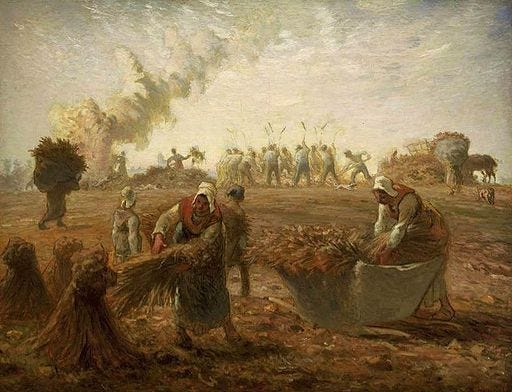
After all, modernity also began as a type of thought, interacting with material realities. Take a time machine back to Europe in the late 1700s, and look around. It will resemble the medieval world of feudalism. Most ordinary people still worked the land as they had for centuries: they wore the same clothes, used the same tools, and went to the same churches. What was modernity back in the 18th century? A few French philosophers arguing in a salon. A couple of steam-powered mills in the English countryside. A tiny stock market in London, with a handful of corporations trading sugar and spice and everything nice. Modernity at that time lived mostly in the thoughts of some people. But eventually these thoughts would physically change the world, and modernity would reshape Earth in its image. The modern mind, then, preceded the modern world.
The modern mind was defined by adaptation to the central feature of modernity: change. Modernity was fundamentally a dynamic age: it saw populations around the world explode, economic productivity skyrocket, scientific discoveries increase, and culture constantly evolve. Take someone from 1780, put them in a Rip Van Winkle-style deep sleep for 200 years, and awaken them in 1980: every single institution, facet of life, and way of thinking would puzzle and confuse them.
This is distinct from all the world systems of premodernity. From Mexico to Phoenicia to Japan, these systems tended to prize stability, and they evolved in a world that changed slowly. The older the civilization, the longer they tended to last: ancient Egypt survived for more than 3000 years, making the mere thousand-year history of Rome look short-lived. Mythic time spans were even longer: each of the four Hindu yuga cycles lasts for 4.3 million years. To a premodern person, the world felt cyclic: populations would grow and decline, empires would rise and fall, and culture focused on preserving the past instead of transforming the future. Life changed, but the way of life did not. New socioeconomic systems–agriculture, Iron Age empires, feudalism–mutated on geological time spans.
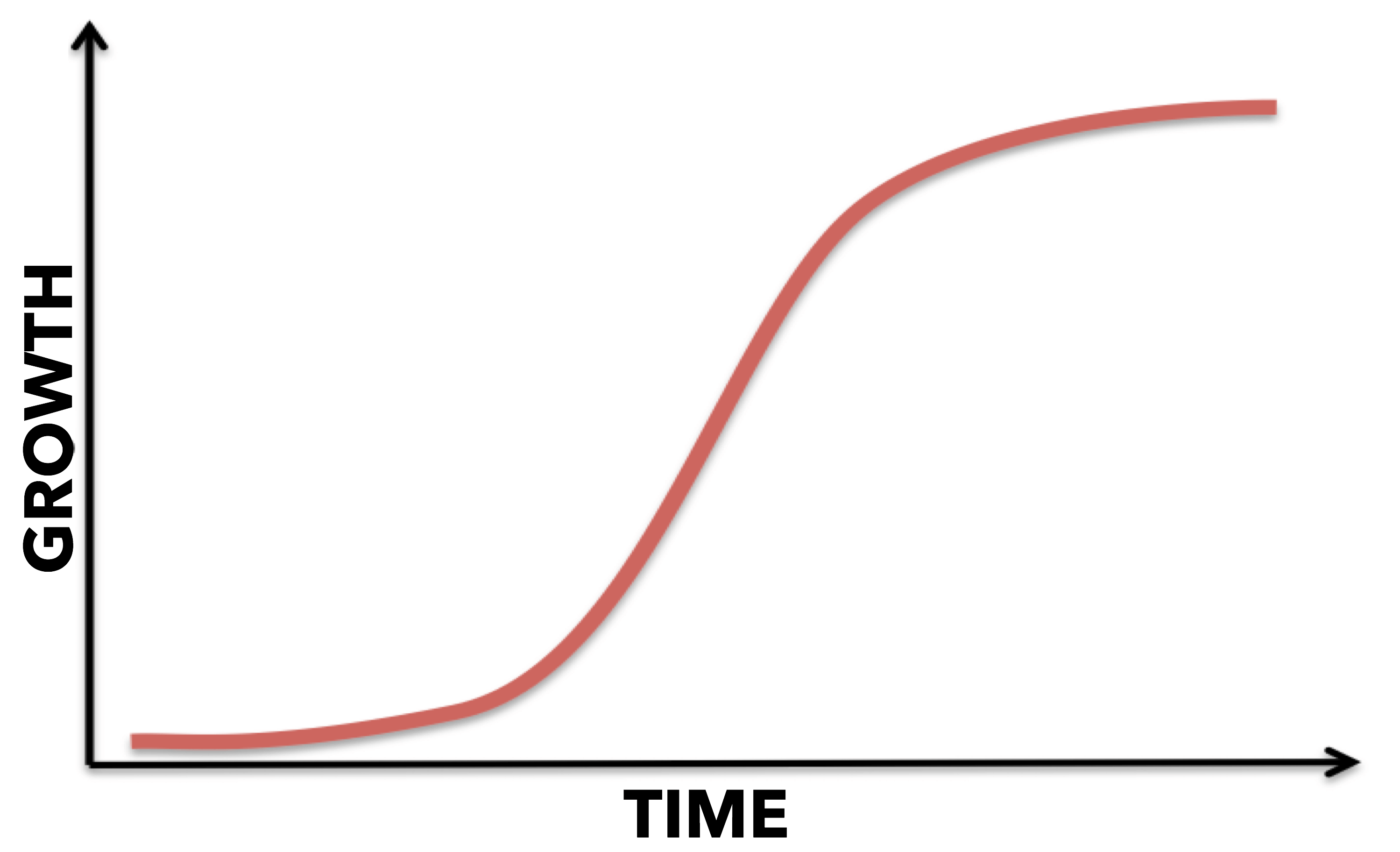
All these systems existed in a static world. Modernity created and then fed off a dynamic, unsteady world. The postmodernists supposed that the central feature of modernity was its grand explanatory narratives. I offer that these narratives were only a byproduct of constant material and technological change. This change–this technological acceleration–was the true defining feature of the modern age. What, then, comes after modernity? A more static world.
This world will resemble the premodern systems of the distant past more than it resembles the modern system of the recent past. Our future does not look like a nostalgic vision of our parent’s world, or even a world that has been preserved at all in the past two centuries. Our future looks like the ancient world, a place misunderstood, poorly recorded, and often denigrated. Our economic, political, and social institutions must adapt to a world without the constant, stable growth they are built upon. Our culture must adjust to the more mythic rhythms and splintered subjectivity of the ancient world. Most of all our minds must give up the illusions of modernity, with its promise of infinite progress, while rejecting the vague nihilism of whatever we call “postmodernity.” Inevitably, we must cool down. We have been overheating.
You can think of the modern world as a “hot” place. It is dynamic, energetic, unstable. Premodern societies, as a rule, tended to be “cold” places: long-lived, enduring, stable. I draw these terms from the great science-fiction writer Ursula K. Le Guin, who wrote a far-seeing piece back in 1982 called (take a breath) “A Non-Euclidean View of California as a Cold Place to Be.” She contrasts the “cool” world of pre-Columbian California, the California before colonization and industrialization, with the Golden State as it existed in the 1980s, the “hot” world of freeways, canals, and bridges. She herself takes the ideas of “hot” and “cold” societies from the anthropologist Claude Levi-Strauss, who says that, in hot societies, “differentiations between castes and between classes are urged without cease, in order that social change and energy may be extracted from them.” Modernity was hot. What, then, is postmodernity? Ironically, given our literally warming planet, postmodernity is society’s great cooling-off.
Taking the temperature of media
Across the spectrum, we already see our world cooling off as the age of infinite growth slips away. Populations across the developed world have started to naturally decline; our infinitely productive capitalist system transitions into technofeudalism; productivity dips as science reaches points of diminishing returns. But future essays will discuss the changes in our material world: the hard facts of technology and economics. Postmodernity refers more to a mental state than a material one. For now, let's talk about our minds–and specifically about media.
When I refer to the “postmodern mind,” I really refer to the shared subjectivity of people in a connected society. Shared subjectivity is constructed by media. The term itself is self-explanatory: there is a medium of shared information between people. Without media to transmit information, groups of people cannot communicate shared ideas or agree on common myths, institutions, and practices. The differences between the modern and postmodern mind, then, are marked by their different media (whether or not that media actually creates the difference, or if it is a reflection of some upstream change). We can best understand our changing subjectivity by analyzing the media that constructs that subjectivity.
The obvious place to start understanding media is, of course, Understanding Media (1964). This classic text launched media theorist Marshall McLuhan to a kind of breakout popularity in his time that we don't really see with intellectuals today. He appeared in everything from Life to Esquire to Harper’s; he had an interview published in Playboy; he hosted a “McLuhan festival” in San Francisco in 1965 with advertising executives. A lot of people probably know him more from his awesome cameo in Annie Hall rather than his actual books. McLuhan never let the stuffy conventions of the academy limit himself: his writing style is contradictory, koan-like, and overall very 60s. This is, after all, the man who (according to Timothy Leary) coined the psychedelic motto, “turn on, tune in, drop out.” Nowhere does he display this obscurantist tendency more than with one of his most controversial concepts: “hot” and “cold” media.
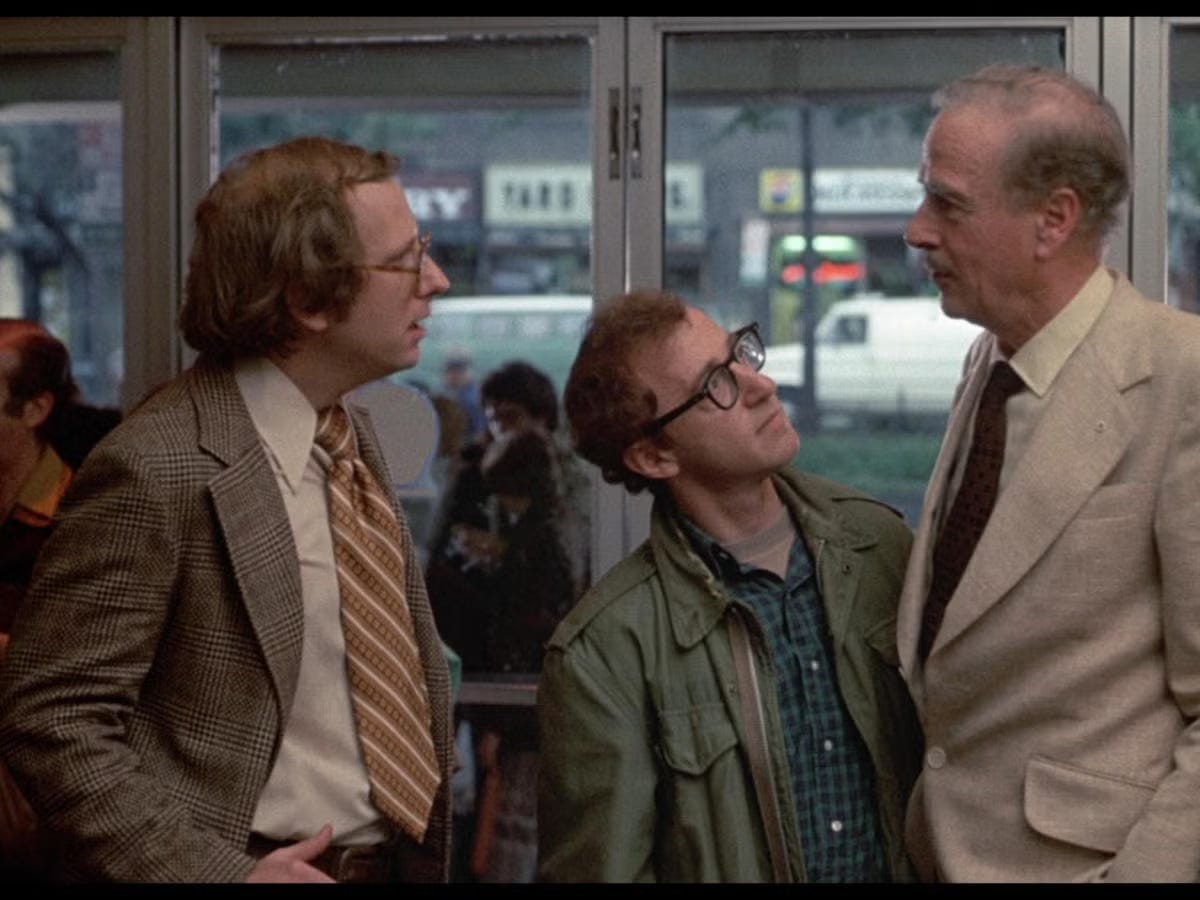
In Understanding Media McLuhan extends Levi-Strauss’s anthropological usage of “hot” and “cold” to classify media. People have argued about the meaning of these terms ever since. McLuhan defines these terms very loosely, with a Freud-like gift for smuggling remarkably obscure and unverifiable claims into his theories. A typical sentence reads: “we live mythically but continue to think fragmentarily and on single planes.” Another great McLuhanism: “the principle that distinguishes hot and cold media is perfectly embodied in the folk wisdom: ‘men seldom make passes at girls who wear glasses.’” You can just see this guy palling around with Timothy Leary. I’ll do my best to explain his usage of the terms more or less faithfully, but half the point of reading McLuhan is reinterpreting him.
McLuhan drew the distinction between hot and cold media in terms of how much participation it invites from the consumer. From Understanding Media: “hot media are, therefore, low in participation, and cool media are high in participation or completion by the audience.” Hot media provide involvement without much stimulus: it extends “one single sense in ‘high definition.’” Examples would be books, radio, and film: books use the single sense of sight, while radio uses the single sense of hearing. Films use both. McLuhan classified television at the time as cool because it was "low-definition," compared to the high-quality image of movies projected in a theater. Television now, viewed in 4K on a home TV, should definitely be classified as hot–although, given that it is often viewed alone, must be seen as cooler than a film viewed in a theater. There is no interaction in “hot” media: one source speaks out with authority to many listeners. Cold media requires more engagement; it is a more participatory, attentive type of media. The original example of “cold” media is, of course, face-to-face conversation. You cannot talk back to a book and make it change its argument, but you can do exactly this in dialogue.
But I want to extend an understanding of hot and cold media past mere participation to take in their sociological functions. Hot media requires less participation, but is also more reproducible. It allows for a single viewpoint to be perfectly replicated: without participation from an audience, the message is exactly the same to everyone who interacts with it. When you print a book, everyone who reads it reads the exact same words you wrote. Hot media is the ideal medium for messages from the top to be spread among the masses. Cold media, on the other hand, is not highly reproducible: it may change in response to participation. Oral traditions, for example, are known for mutating over time, keeping only certain key mythical elements in common. Cold media clearly faces limitations when organizing large groups of people because it is slow, participatory, and constantly changing. Hot media turned out to be the key tool that modernity used to organize its institutions: not only is the medium the message, but the society is the medium.
For most of human history, people lived in small groups and subsisted almost entirely on “cold” media. It is no surprise that many date modernity as beginning with Gutenberg’s printing press. Before railroads, telegraphs, and textile factories, the change from cold to hot media marked our true societal transition into the modern age. The book is the canonical example of a “hot media”. It ushered in modernity, and the literacy campaigns of the 1800s and 1900s would bring millions of people into the fold of modern subjectivity for the first time. “Hot” media peaked in the mid-twentieth century with radio, television, and film, which were even more effective forms of top-down media than books, pamphlets, newspapers, and other printed media. These were truly “high-definition” media formats, hijacking the senses to speak directly to the subconscious. Not all technologies of the era produced hot media, though. McLuhan refers to the telephone specifically as a cool medium. Indeed, the 20th century, the era that ended modernity, did introduce a number of cooler technologies that broke down the carefully curated shared truth of modernity. The greatest new form of cold media would come after Understanding Media was released in 1964. That is, of course, the Internet.
Computers introduce a participatory nature that inherently cools off the media they host. Forums and messaging services, the first communication formats on the Internet, essentially reproduce dialogue, a typically cool medium, in text form. Most social media is fairly cool as well. Peer-oriented services like Facebook are quite cool, though somewhat warmer than messaging services, and “follower-based” networks like Instagram and TikTok are warmer still. The great exception to this general online “cool” trend is Twitter, a very hot form of media indeed, and for this reason it is the favored social media of the powerful: governments, corporations, and celebrities. Yet even Twitter involves back-and-forth communication: unlike the traditional proclamation posted in the town square, users can openly respond on Twitter to the pronouncements of powerful accounts. Of course, no media could be cooler than the new large language models (LLMs) like Chat-GPT, generating tailor-made text to reproduce conversation. In generative AI, we come full circle back to fully participatory media: dialogue with machines instead of people.
The participation element of computer media shapes the entire user experience. Sitting on your phone scrolling TikTok does not require much participation, so it may appear very “hot”, but your interaction with the algorithms that control your feed introduce a “coolness” to this media completely different from the experience of reading a book or watching a TV show. A book cannot change based on who is reading it; its reproducibility is absolute. Social media, on the other hand, always involves participation: even if you don’t actively post, your recorded activity shapes what you see. Tech platforms have introduced so many metrics to track your attention that just lingering for a bit longer on a certain video counts as participation. The top-down hot media of modernity only speaks; the cooler media of postmodernity listens, even if only to change its argument to be more personally appealing to you.
Computers were just emerging as McLuhan did his work, and the potential was obvious even back in the 60s. The 60s were, after all, a great time for technological predictions that still haven’t come true: we were promised HAL 9000, moon colonies, and psychedelic space babies by 2001, when instead we got blogs, Islamic terrorism, and Shrek. (Here I must attach an essay on Shrek as a postmodern take on fairy tales, which it is.) But McLuhan saw the future more clearly than most. In Understanding Media, he predicted that computers would lead a return to “cold” media. Sociologically, he predicted that this new technology would shape the entire world into a “global village”, saying: “after three thousand years of specialist explosion and of increasing specialism and alienation in the technological extensions of our bodies, our world has become compressional by dramatic reversal. As electrically contracted, the globe is no more than a village.”
Here we see an intimation of the ancient future: our new media returning us to the distant past. McLuhan was not the first to recognize this. As far back as 1933, the linguist Edward Sapir noted that “the multiplication of far-reaching techniques of communication…increases the sheer radius of communication, so that for certain purposes the whole civilized world is made the psychological equivalent of a primitive tribe." But it would take the rise of the Internet in the 1990s for the term “global village” to really catch on. Most people focused on the “global” part rather than the “village” part. Hurried cityfolk might think of a village as a peaceful, pastoral place, but they tend to be pretty fractious. They certainly don’t function seamlessly as part of some larger political body: tribes don’t get along well with other tribes. McLuhan thought we would be retribalized because the global village basically ensures maximum friction and disagreement. In 1969 McLuhan argued that “the global village ensures maximal disagreement on all points because it creates more discontinuity and division and diversity under the increase of the village conditions; the global village is far more diverse.” Once the initial utopian euphoria of the Internet wore off, this stark new reality became very clear. The Internet, it seems, is dissolving our civil society.
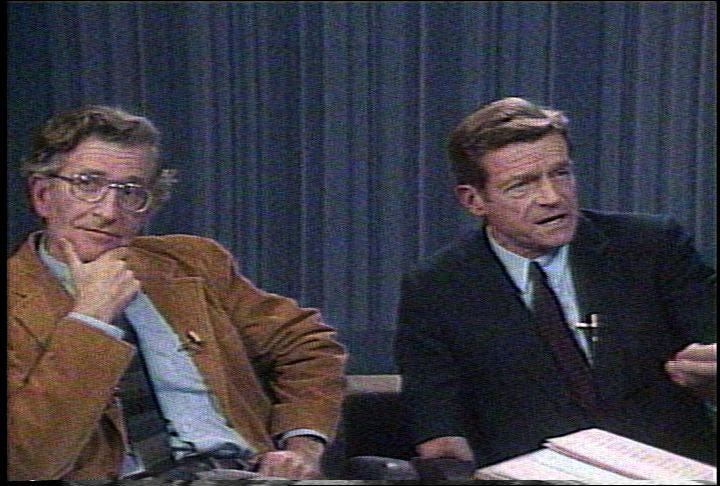
Accustomed to a political and cultural system centered around hot media, we react to the new cold media with alarm. Thinkers from traditional forms of hot media (writers for newspapers, academics, television personalities) sound the alarm about heavily personalized online “realities” that curate content to the individual. This, they warn, causes a breakdown of shared truth: a “post-truth” society. But I question whether shared truth–or rather, mass truth–deserves to be an ideal to strive for. For most of human history, isolated societies lived in entirely different epistemological realities from their neighbors. The very idea of a “shared truth” is a modernist fantasy made possible only by top-down, “hot” media. The more eminent the publication, the more they bemoan their lost power–the New York Times looks back in longing to the days when it really did form the only source of truth for millions of people. 1950s America is often cited as a highpoint of consensus and shared truth, when everyone trusted good old Walter Cronkite. Convenient that at that time, a vast yet curiously homogeneous nation shared just three TV channels. All of those networks back then also shared the same basic ideology: patriotic, anti-Communist, pro-corporate, gently patriarchal, assiduously “moderate.” Noam Chomsky describes the process of calibrating a specific worldview between different news outlets brilliantly in Manipulating Consent (1988). Never before or since has hot media united so many people behind the exact same opinions. Shared truth is just another term for shared propaganda.
Information media, especially social media, is actually causing a return to older ways of interaction and socialization. Take a recent panic: the role of AI and literacy. Students now widely use LLMs for reading class material and writing essays. Video content on TikTok, Instagram, and Youtube has overtaken written content in popularity. Literacy rates are already suffering. The National Assessment of Educational Progress, administered by the US Department of Education, has shown that just 43% of fourth graders in the US scored at or above a proficient level in reading in 2024. This figure has declined every year since 2019. Adult literacy rates have fallen too; the percentage of adults with low literacy rates grew from 19% in 2017 to 28% in 2023. It is not difficult to imagine a near future where most of the population listens and watches instead of reading and writing, relying on AI to fill in the literacy gap.
A mass society that is largely illiterate? Nothing could be more traditional. After all, mass literacy was unknown before modernity, and educating the masses to read was one of the key sociological projects that created modern subjects. Our world went from a place of people talking and listening, to one of them reading and writing–and now we return to talking and listening. AI may usher in a post-literacy era, fit for a postmodern society, where reading becomes the niche subject of specialists that it was before mass-produced books and industrialized education. We may not have knights in the ancient future, but we will probably have secular monks (if we already don’t). The main difference is that proximity is no longer required for shared realities, as it was in premodernity: someone can share media with someone on the other side of the world, while living in a different shared reality than their physical neighbor. Yet the effect is the same: media is cooling off.
As media cools off, culture cools off with it. Mass culture is a consequence of mass media, so it is no surprise that shared culture grows weaker as we splinter into ever smaller and more diverse subgroups online. The mass culture of the 50s and 60s and its counterpoint, the counterculture, both relied on those same three TV networks conditioning millions of people to think, act, and look the same. As cold media replaces hot media, the old interaction form of the village replaces the top-down command system of the industrial age. For example, the online phenomenon of cancel culture, far from being unique to the Internet, functions as a contemporary version of the complex systems of public shaming and social enforcement that kept order in small villages. Just as villages tended to resist top-down modern centralization, the tiny echo chambers of the Internet prevent the formation of the large cultural movements that once united large nation-states.
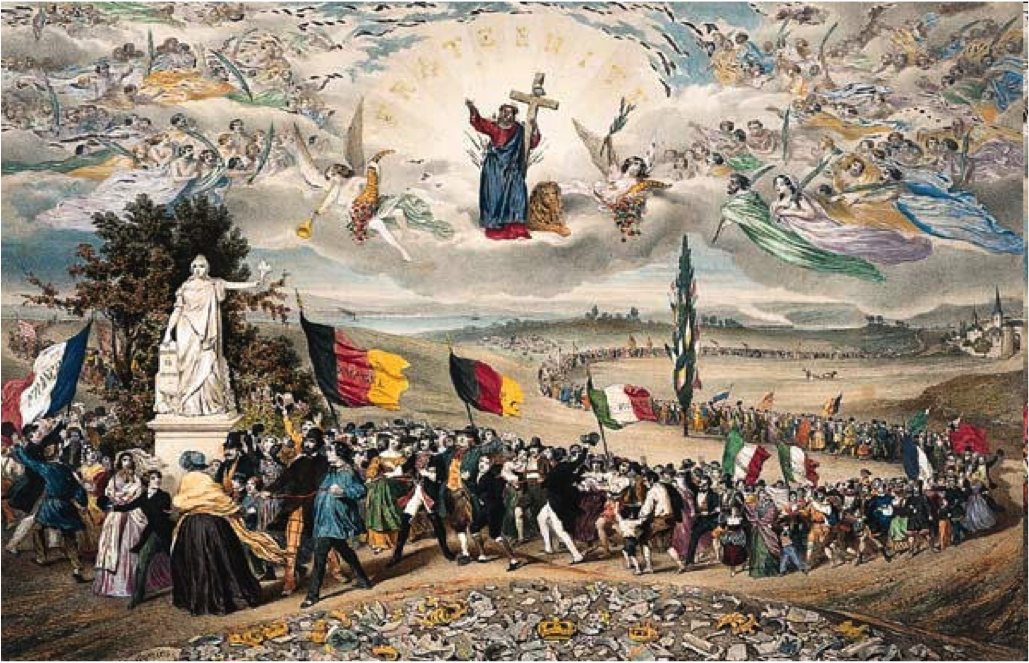
But media does not just function as a way to share culture and ideas: it lies at the heart of the organization of a society. The ambitious, centralized political institutions of modernity would have never been possible without the top-down, “hot” media of printed books. Large numbers of people could never have been organized into nation-states or mass democracies without hot media creating a shared reality for them to believe in. Historian Benedict Anderson asserted that nations are socially constructed in his book Imagined Communities (1983), and connected nationalism with what he called “print capitalism.” For a nation, reading the daily paper (a classic “hot medium”) acted as a “mass ceremony” to create this imagined community. The American Revolution was kindled by pamphlets such as Thomas Paine’s Common Sense, coordinated by written proclamations in colonial legislatures, and sealed by a written code of laws: the Constitution. The French Revolution, too, sustained itself through media: the soaring rhetoric of the Declaration of the Rights of Man, the radical tabloids of Murat, and the war propaganda of General Bonaparte, the man whose pamphlets built the myth of the invincible Emperor Napoleon. From Poland to India, nationalist movements for independence often began with revivals in national culture through media like literature, theater, and folk music.
Media coordinated the Scientific Revolution: a community of literate scientists sprang up around Europe, spreading new developments through written form. Religious ideas spread rapidly too: the printing press played a huge role in the Reformation a few generations later. McLuhan notes, “The hotting-up of the medium of writing to repeatable print intensity led to nationalism and the religious wars of the sixteenth century.” But it was not the content of these books, pamphlets, and newspapers that produced these revolutions. If McLuhan was right that “the medium is the message,” then it was the very form of written media itself–the ability to convey reproducible, “high definition” data to many people at once–that proved so destabilizing and ultimately modern.
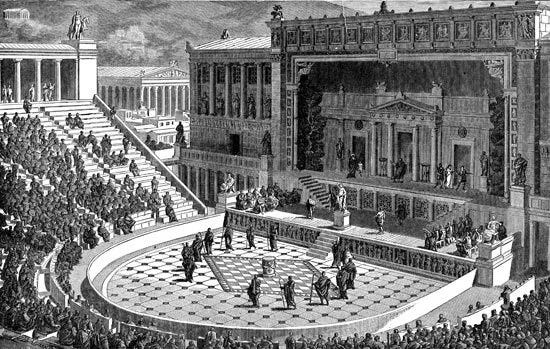
Command and coordination prove just as impossible with too much communication as with too little. Premodern cultures resemble a small Athenian theater, just large enough for a group of people to listen to the voice of a single person. With modernity came huge increases in populations: suddenly arenas could fit tens of thousands, even hundreds of thousands of people. But improved tools such as loudspeakers gave those in command the ability to speak directly to these massive crowds–and by speaking to them, unify them and lead them. The modern crowd reached a sort of apotheosis in mid-century dictatorships: witness the huge throngs seen in The Triumph of the Will or in Soviet military parades, where hundreds of thousands of people march as one. The media of postmodernity has given every single person in a crowd a loudspeaker. A noisy arena full of people with loudspeakers cannot be governed any more than that same arena with weak human voices can. The new media has caused us to revert to the old state of chaos. In the words of Hungarian philosopher Laszlo Foldenyi, modernity “was so variegated that the world itself seemed endless. The many different kinds of voice create the impression of an opera. Today, however, everything has contracted to such a degree that this dialogue is frequently rendered illusory, no matter how painful its absence may be. Instead of the rich strains of an opera, only an aria can be heard from the cacophony.”
That postmodern cacophony results in effectively the same kinds of subjectivities and institutions as the premodern arena. Cold media goes hand in hand with cold societies. In this way our cold Internet media reflects a society retreating from the “hotness” of modernity and towards the “coldness” of the ancient past. Instead of relying on the last few centuries of modernity to predict what will come, look to the cold societies of the deep past to see what our cold future might resemble.
Cold antiquity and hot modernity
In the West, however, we have forgotten what a cold society looks like. Our inability to see the future stems from our inability to understand the distant past. Anything from the premodern era gets remembered in some sort of vague haze: the “Dark Ages” in Europe, and prehistory in the rest of the world. (Non-Western countries like China, Japan, and India, on the other hand, often remember their premodern history rather well, as a golden age before the white men came from overseas to subjugate their countries.) We may engage in a bit of wistful noble savagery regarding premodern people, but we always condescend to them: they are never considered equals. We look at them as basically powerless, superstitious children.
Ever since the Renaissance, Europeans have denigrated their ancestors who lived before the Renaissance, basically portraying them as religious fanatics or easily impressed sheep, unable to use reason to see the truth of the world, duped by the opium of the masses. Yet it was the modern man, living within enormous countries of millions of people, bombarded on all sides by propaganda, serving huge systems of state and corporate power, who truly lived a life of conformist fanaticism. (Also, with all due respect to Marx, premodern peoples actually didn’t have opium, or really any drugs other than alcohol. Modernity invented all the cool mind-numbing drugs that we like so much.) McLuhan noted, “Literacy creates very much simpler kinds of people than those that develop in the complex web of ordinary tribal and oral societies.”
Premodern states exercised far less power over their subjects than modern, centralized states did. These states tended to change often. In many cases average people might not even know who was their technical “ruler.” Sometimes the state of power was so obscure that even high-ranking people would not know the true state of affairs. It was commonplace for centuries in medieval Japan, for instance, for powerful shoguns and warlords to maintain a polite fiction that the emperor actually ruled over them, even if the emperor was just a puppet. Elaborate courtly rituals would maintain this fiction: bow before the emperor, say a few little poems, and then go have your closed-door meetings where actual decisions are made. Who believed this? Perhaps some local people did. Most likely, though, they wouldn’t care. Why would they? Emperor, shogun, whoever: they would never come to their village. Without electronic communication, they would never hear their voice or see their face. At best, they might hear some proclamation read aloud in the square (although they couldn’t be sure that this was not forged, or somehow modified by their local lord).
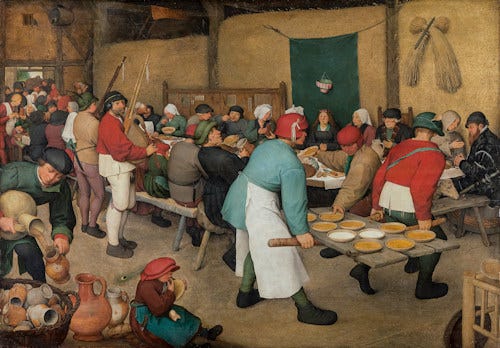
Peasants throughout history have often deceived their rulers with great shows of obedience, while carrying on their lives fairly independently. Dismiss peasants as stupid and superstitious if you want, but they have long proved quite sly at winning autonomy from centralizing governments. For this reason, ruling classes in premodern societies tended to dismiss peasants as impossible to control. Revolutionaries despaired too: when Marx said peasants lacked “class consciousness,” he was referring to the fact that they were difficult to organize and direct within a party. It was the bourgeois man of modernity who read books, sang national anthems, and believed in ideals, who would work tirelessly on behalf of elites. They would fill the ranks of citizen armies; they would diligently labor on behalf of their bosses; they would obediently vote as their political party instructed.
Modernity needed an ever-expanding base of human beings, raw materials, land, and markets to keep heating up. As it did, it shook people loose from their old world-systems. It promised to swap superstition for liberation. All old traditions had to be cast as restrictive, rigid, and simplistic. Traditions controlled the outward shapes of the lives of premodern people to a great degree. Yet these seemingly fixed traditions conceal a great degree of chaos within their worldviews. Most premodern peoples, for instance, believed that the world teemed with a huge variety of gods, spirits, demons, and angels that lurked all around them. How could a pagan Greek really believe in a “stable world” when it was widely accepted that a capricious deity might choose them for torment at any moment? Monotheism may have tamed the spiritual world somewhat, but medieval Christians retained beliefs in saints, demons, and spirits. The seeming “stability” of life on a historical scale conceals the great daily fears people held of an inscrutable, treacherous world. Death formed a constant part of life in societies where a majority of infants would die in their first year of life, and people would try all kinds of traditions–prayer, confession, sacrifice–in vain attempts to appease the gods. None of these traditions, though, could ever truly protect someone. Someone might think they have done everything right, and still somehow offend a powerful god. While religion provided a general sense of existential meaning, it was often no defense against the travails of everyday life. Fate, destiny, God’s plan: these might exist, but they were unknowable by humans.
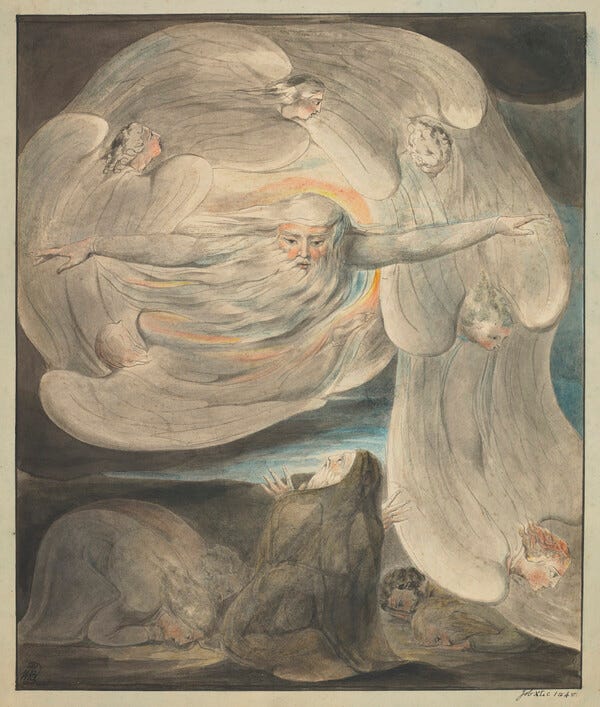
In the Biblical story of Job, God’s favorite servant is “blameless and upright,” yet Job was still punished brutally. Why? God and Satan made a bet. Yes, all-powerful God treats his favorite human like a racehorse. Justifiably, Job asks God why he has been punished: God answers, “Where were you when I laid the Earth’s foundation?” God even implies that he punishes Job simply because he can: “Do you have an arm like God’s, and can your voice thunder like his? Then adorn yourself with glory and splendor, and clothe yourself in honor and majesty. Unleash the fury of your wrath, look at all who are proud and humble them.” The modern man might rage at this answer. Job meekly replies, “Surely I spoke of things I did not understand.” This answer was canonized in the Hebrew Bible as the authoritative response to man’s questioning of a higher power. This sort of helplessness was the rule in the ontologies of the ancient world. The Greeks, too, believed in hubris: the punishment of the Gods for excessive pride, a reminder that human beings are playthings in the hands of more powerful beings. In Euripides’ play The Bacchae, the Chorus sings of the proud Pentheus: “in the delusion of his wits, he thinks his violence can master the Invincible. But there is One ready and willing to correct his heresies–Death.” The Greeks, like other premodern cultures, never held the overweening assurance of the modern man. Lost in a frightening world they could not explain, premodern peoples felt the same confusion and obscurity that marks postmodern subjectivity.
Modernity gave its citizens explanations amidst the swirling chaos of life. We do not have superstition anymore, they said. We have science. True: science undergirded the great confidence of modernity. It is ironic that science, given its explicit method of epistemological humility, would give its adherents more confidence than traditional believers. But the traditional believers, despite their unshakable beliefs in religion, thought of their knowledge as fixed: that which is unknown, such as the nature of God, remains forever unknown. Their beliefs are, like the traditional society, stable. Science, on the other hand, is engaged in a project of perpetual expansion: empirical knowledge is added onto an ever-growing edifice. While much may be currently unknown, it will not always stay that way. Future generations will know much more than us: at some point they may know everything. Projection to this confident, omniscient future becomes a favorite pastime in modernity: stability can only be imagined once everything is known. To fall short of omniscience–to live, as we postmodern subjects do, painfully aware of the same unsolvable antinomies that tormented our ancestors–appears to be a failure.
Just look at the unshakable confidence displayed by the “science-believers” during the COVID pandemic. Every new pronouncement from public health agencies–no matter how much it contradicted previous orders, and no matter how many qualifications the scientists gave–was met with uncritical devotion from a certain mass of the public. It was assumed that COVID would be eventually understood and cured; that public health tools such as quarantines, social distancing, and masks would tame the disease; and that eventually vaccines would completely defeat the virus itself. To suggest that the pandemic would be ended by old-fashioned “herd immunity” (that is, the way all pandemics throughout history have always ended) was taken as a defeat. That the pandemic did eventually end this way proved deeply troubling to many. To some, in the “zero-COVID community,” that fact remains unacceptable, 5 years later. To these people, there cannot be variations that pop up without warning; there cannot be surges that rise and fall seemingly at random; there cannot be vaccines that are not always effective. These people wait, full of faith that science’s war against COVID is still ongoing, and that full victory will eventually come.
Of course, that same pandemic converted many back to traditional views of medicine. A permanent disillusionment in public health and Western medicine is one of the enduring legacies of COVID. Talk to someone who feels betrayed by the WHO, the CDC, pharmaceutical companies, and the medical industry, and you will find a mindset of someone returning to the premodern view of the human body and illness. While cloaked in different language, the subjectivity of the postmodern mind is unmistakably ancient–a fact which most postmodern scholars either don’t understand or willfully hide.
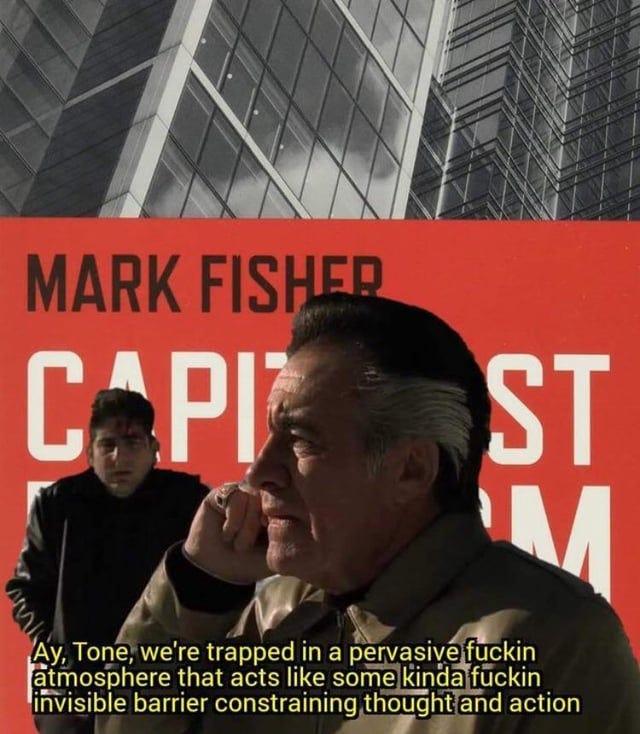
If premodern beliefs are simplified to the point of stupidity in order to conceal their sophistication, then postmodern beliefs are obscured to the point of confusion. Even eminent scholars of postmodernism cannot quite say what “postmodernism” means. At best we say that none of us have beliefs or traditions anymore. This is a truly brilliant piece of propaganda: it is as if someone believed the air they breathe is just empty space. This misconception comes about because all the old traditions of individual societies have indeed lost meaning for postmodern subjects. But human societies cannot exist without organizing principles, and our global society has many. Most of all, we believe in capitalism. Mark Fisher coined the term “capitalist realism,” meaning we cannot imagine a world without capitalism. Indeed, at this point a single subjectivity has spread around the entire world, and it lacks serious opponents. Everyone in the world wears similar clothes, enjoys similar content on smartphones, and at least pays lip service to similar political ideals. (Just three states in the entire world lack a written constitution: Israel, Saudi Arabia, and San Marino.)
The postmodern subject does have a single worldview. Everyone on Earth shares it. What does this resemble? The premodern society. In ancient times, a single worldview was shared by everyone in a single society. In today’s postmodern times, a single worldview is shared by everyone in the entire world. Modernity was the outlier: it featured several different worldviews jostling for space. Politically, intellectually, culturally, there were choices. In both the premodern world and postmodern world, there are no choices left. The term “global village” was used by McLuhan to refer to our postmodern world, and the phrase is indeed telling. The world feels smaller because we literally live in a single village. With all our technology and power, we feel like villagers of old.
You may argue that no one really believes in capitalism, or in the globalized society that has engulfed the Earth. The premodern mind actually believed in their traditions, their gods, and their magic: we must be different because the postmodern mind doesn’t believe in capitalism. Again, this betrays a modernist perspective: the idea that one must believe in an idea that creates progress and change. One only needs to believe that there is a single world, that it is inevitable, and that it cannot be changed for a worldview to find currency. Indeed, in most premodern societies people did not believe anything could be done by humans to make progress or change history. Some believed that the world was ultimately cyclical. Others believed that one day God would purify the Earth. In any case, the matter was out of human hands. We can never know what kind of doubts premodern peoples held in God’s plan: most of them couldn’t or didn’t write down these thoughts. Society needed everyone to merely accept that reality was decreed by God, and to live their lives accordingly.
Similarly, whether you dislike capitalism or not, most of us accept that capitalism controls our reality. Money has the same force today as God’s will, or gravity. We worship money because it is the only force left really worth being worshipped. Capitalism, as always, has answered the call to become a kind of all-encompassing tradition fit for the global village. American Christianity, for instance, has explicitly begun to incorporate capitalist teachings into its liturgy to literally make The Market into an object of religious veneration. In culture, nostalgia fulfills the same role of traditional culture, with the spin that nostalgia can cycle through different time periods to give us the stimulation we need that premodern villagers lacked. No tourist is going to be touring a Chipotle anytime soon to see an example of rich capitalist realism culture, but that only speaks to how vibrant (aka "living") it is. As capitalist culture entrenches itself, it approaches the all-controlling heights that tradition once held: our minds are just as transfixed by the contours of capitalist culture as the premodern mind was transfixed by their own religion. Capitalist realism begets a premodern subjectivity.
A better word for the future than “postmodern”
The new world will, in the beginning, look a lot like modernity. Although it would make a cool fantasy novel, the future will probably never look like the premodern world. But it will feel like premodernity to us. If the term “postmodern” still brings up too many memories of pretentious art galleries, call this future “neoarchaic.” The uncertainty and confusion we recognize as “postmodern” represents a long return to the ancient human condition. Cold media will create an idiosyncratic, post-rational umbrella of beliefs under a larger, central tradition of globalized capitalist realism. In this way the premodern and neoarchaic (or postmodern) subjectivities–the felt experience of living through these times–will merge. Subjectivity, though, must interact with material reality: with new media technologies, new economic conditions, and new social changes. The essential similarities between postmodernity and premodernity come down to a shared sense of stability.
Human beings quickly get used to anything. In any time, in any place, we regard the world we are born into as natural and perfectly obvious. What we feel emotionally is change. We feel happy when our life seems to improve; we feel sad when our life seems to decline. No matter how amazing our situation may be, we grow accustomed to it, and start to judge it by how it changes. Even if we do reach a utopian future of plenty, we will judge it emotionally by the changes that take place during our life. And postmodernity, like premodernity, will feel more stable–for better or for worse.
Modernity was an unsettling place. It could only sustain itself by promising ever more change: otherwise people would never accept the changes it had already wrought. Marx famously said in the Communist Manifesto that “constant revolutionizing of production, uninterrupted disturbance of all social conditions, everlasting uncertainty and agitation distinguish the bourgeois epoch from all earlier ones. All fixed, fast-frozen relations, with their train of ancient and venerable prejudices and opinions, are swept away, all new-formed ones become antiquated before they can ossify. All that is solid melts into air, all that is holy is profaned.”
But people learned to find a sort of stability in this instability. The only way to make it through the massive changes was to buckle down and hope that even more changes might come to alleviate the pain. For a time they did. The innovation of social democracy eased the blow of capitalism. The innovations of technology made life easier and more convenient, even if it became more uncertain and precarious. Modernity was delivering the goods: people accepted the loss of their village elders in exchange for clean water. The grandchildren of coal miners lived in neat houses in the suburbs.
Now we have built our entire society on a sort of controlled instability: if we deviate from the path of infinite growth even slightly, then our credit-supported economic Ponzi scheme comes crashing down. Everything from suburbs to Social Security to fiat money are based on a strangely conservative, unchanging world where the economy grows 3% a year, inflation grows 2% a year, and the population grows 1% per year in perpetuity. These are all relics of the modernist era of constant change. Grow or die: that is the slogan. That is why we can never rest, never slow down, never enjoy anything: we are birds flying frantically over the ocean, with nowhere safe and solid to touch down.
Ironically then, when everyone assumes that things must keep growing and changing forever, a lack of “change” will itself mark a huge change. We are so dependent on change that simply adapting to a lack of change will be downright revolutionary. It will be a long, painful process as the old institutions of modernity die and we return to echoes of older ways. Even those who profess to prefer the old ways have no idea how to cope. Conservatives are just as ill-suited for this neoarchaic process as liberals are, because most of them want to just “conserve” their preferred version of modernity. No conservatives outside the Taliban are advocating publicly for some sort of premodern society. It’s not exactly a winning approach for votes in a Western country. Just because human beings used to live in a premodern way hundreds of years ago is not that relevant to generations today who have no historical memory whatsoever of a feudal world where the written word is irrelevant and political boundaries are fluid and constantly changing. All the power in our world has oriented itself towards what it calls progress: economic progress, social progress, historical progress. Just as outdated feudal monarchies refused to change even as modernity rose up within their borders, our own institutions have yet to adapt to the changing reality of postmodernity.
Modernity found a sort of stability in instability. When you are driving fast with no brakes, any sort of speed bump feels dangerous. Now, our institutions are becoming unstable as the world becomes more stable. Social democracies face economic devastation as their populations stabilize and stop growing. The world faced wars in the 20th century as colonial empires and communist regimes broke apart, unable to survive if they did not expand. It is not the End of History where we will find peace. That process will likely involve civil wars, social upheaval, and new economic systems. The End of History was the inflection point, marking a change in direction. It marks the point where society begins to cool down.
If this change will prove painful in the short term, that is only because our institutions are too powerful and self-interested to adapt peacefully. Humans can adapt to any future, so long as it does not surprise them. Premodern peoples lived in conditions that we today would consider extreme poverty and ignorance, yet there is no evidence they were any less happy or fulfilled than modern people. As for the future, we do not know if, by our standards, it will look like a utopia or a dystopia. The only thing we can be certain of is that those people living in that future will not think of it as either. It will simply be the world to them.
Second childhood and the achievable utopia
If history mirrors a human lifespan, then premodernity was our long childhood. In that time we exerted little power in the world. We could build homes but not control heat; we could grow crops, but not control rain. People conjured up silly-sounding beliefs and simplified misconceptions about how things work. Yet there was also a sense of energy and enthusiasm. If we had dreams about the future, they seem far-off and abstract. We focused instead on the day-to-day task of living. Modernity was mankind’s stormy adolescence, where we went out confidently to test the limits of our powers. We zigged and zagged, adopting new belief systems and identities. Modern people made all sorts of grandiose plans for the future, and arrogantly looked down on their childhood past, believing, like haughty teenagers, that now they had all the answers. As historian Will Durant said, “perhaps our Western systems, so confident that 'knowledge is power', are the voices of a once lusty youth exaggerating human ability and tenure." This postmodern moment of the last 60 years or so is humanity’s midlife crisis. The dreams we once had seem unachievable: we cannot believe that, after all our work, we have ended up here. We fall into despair about the future.
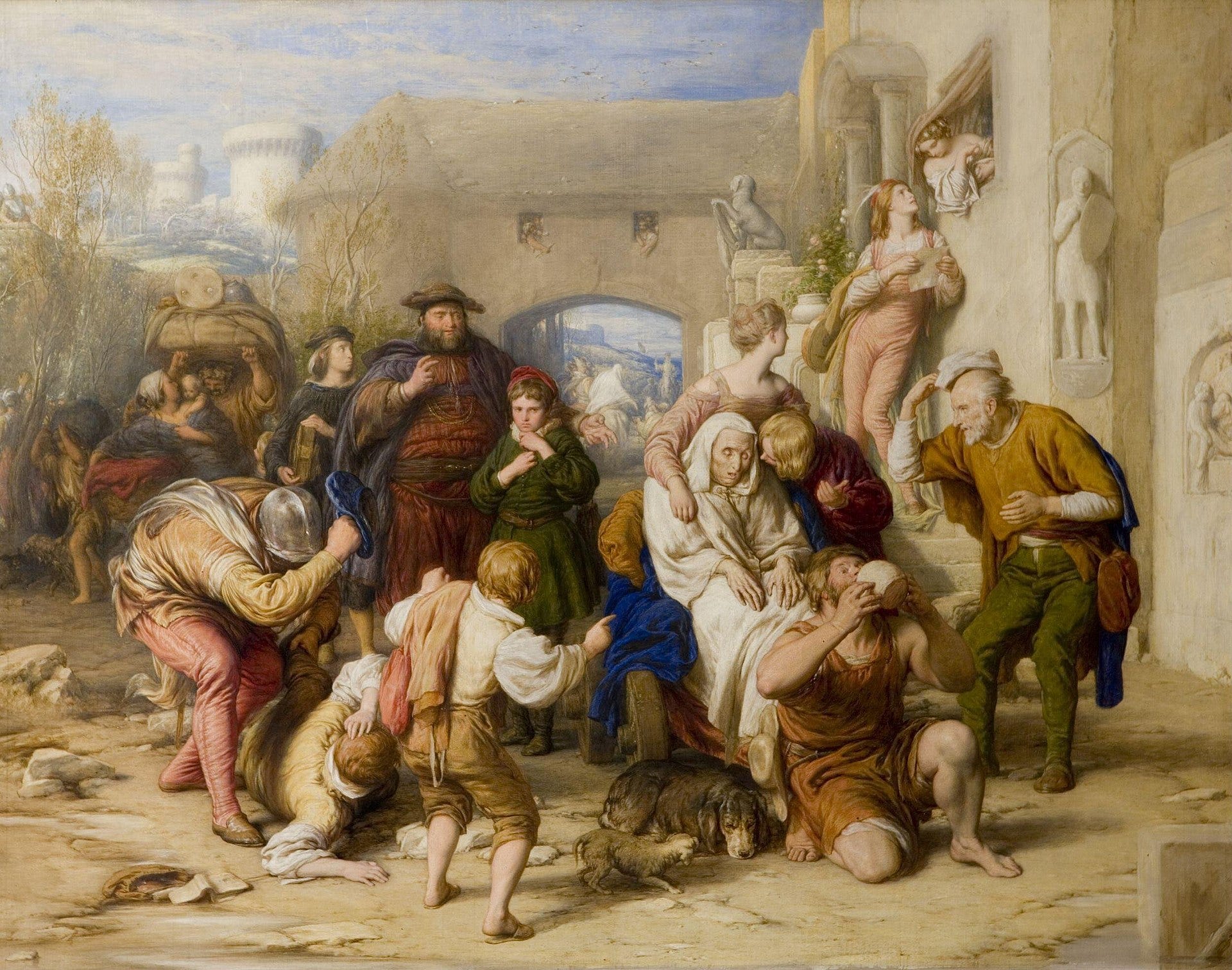
Old age is a time of limited dreams. It is a time where people accept the world as it is. Yet this breeds contentment: free from the unrealistic fantasies of youth, they can once again enjoy the present, as they did when they were children. For in old age we once again resemble our original selves, our childhood selves. It is ancient wisdom that old age is, as Shakespeare said, a “second childishness.” So the human race will return to its ancient childhood with the wisdom of age. Not for nothing that Nietzsche predicted the final stage of human evolution to resemble childhood: “innocence and forgetfulness, a new beginning, a sport, a self-propelling wheel, a first motion, a sacred Yes." A future which resembles the past may prove to be the only form of future worth looking forward to.
An ancient future may sound bleak: premodern superstition without cool village dances or handmade suits of armor. The horrors of modernity without any of the hope. This is because we are still accustomed to the modernist propaganda of progress: anything less than the technological solution of unsolvable human contradictions looks like failure. If we don’t achieve the Singularity, or fully automated luxury communism, or the intergalactic liberal federation of Star Trek, then we can only imagine dystopian ruin. Frederic Jameson, of course, said it best: “it is easier to imagine the end of the world than the end of capitalism.”
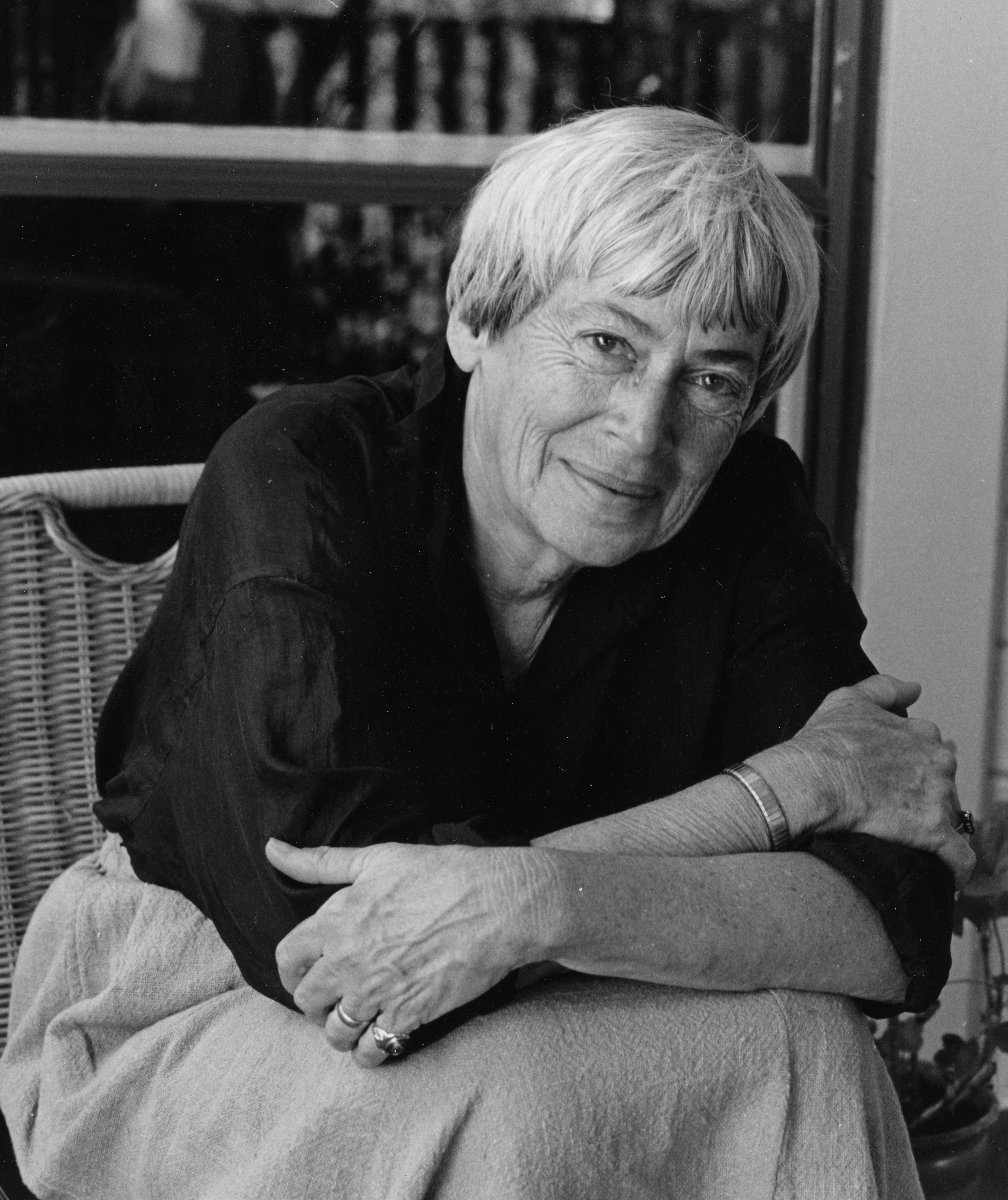
In that same brilliant essay I quoted earlier, Ursula K. Le Guin recognized this failure of imagination, declaring: “It seems that the utopian imagination is trapped, like capitalism and industrialism and the human population, in a one-way future consisting only of growth.” The modernist world of growth and progress is the only future we’ve been taught to imagine. We can only describe our postmodernist world by what it is not: not growing, not changing, not modern. No wonder we are disappointed.
Le Guin takes the concept of “hot” and “cold” societies further, finding in them deeper oppositions: straight vs curved, masculine vs feminine, and ultimately yin vs yang. In her eyes, modernity has lost itself entirely in yang. In her words: “Utopia has been yang. In one way or another, from Plato on, utopia has been the big yang motorcycle trip. Bright, dry, clear, strong, firm, active, aggressive, lineal, progressive, creative, expanding, advancing, and hot. Our civilization is now so intensely yang that any imagination of bettering its injustices or eluding its self-destructiveness must involve a reversal.” Now that our society seems to be cooling off, we anticipate some distant reversal: an apocalyptic end to the changes of modernity. World War III, the Singularity, climate disaster, the zombie apocalypse, the world-ending pandemic. We imagine any sort of return to the past must be catastrophic.
Le Guin thought differently. She rejected the sleek, inhuman utopias of socialism or technofuturism or capitalist realism. She advocated for an organic future: “I don’t think we’re ever going to get to utopia again by going forward, but only roundabout or sideways; because we’re in a rational dilemma, an either/or situation as perceived by the binary computer mentality, and neither the either nor the or is a place where people can live.” If our world cools down, and our civilization slows down, then that dominating line of “progress” can curve back around, and give us time to put life back into balance. This is the cool future that can give us space to live.
Some do not want us to slow down. We are held under the yoke of powerful institutions who refuse to accept that their dreams of limitless disruption and unending control might come to an end. So long as they try to cancel the ancient future, we will be imprisoned in an endless, nightmarish present. But the very technology that gave them power also undermines the propagandistic hold they have over our huge, teeming, complex societies. The cracks have already begun to form in the control systems they have erected, as mass belief fractures into the consciousness of the village. Perhaps we will find freedom in the cold.